The West’s insistence on completely phasing out fossil fuels at the recently concluded COP30 summit exposes their hypocrisy on climate change.
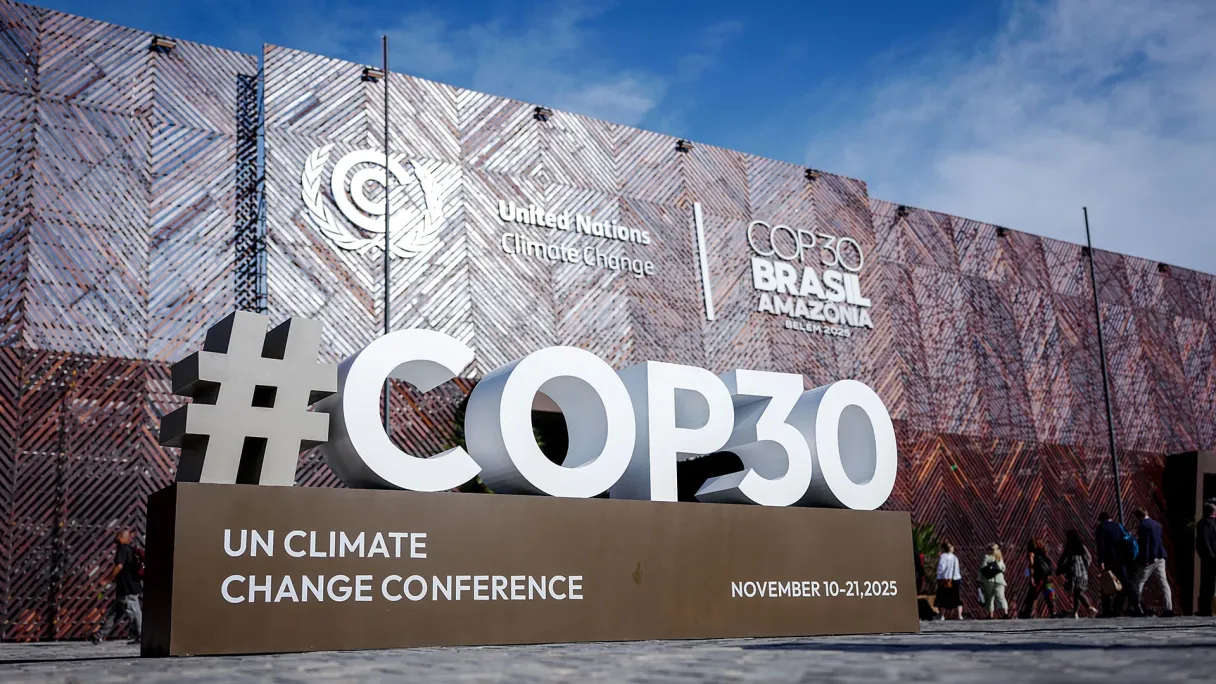
This demand ended up creating a major controversy among the countries of the Global South, who firmly opposed it. Among these countries, India, China, and Brazil firmly opposed the demand. Finally, with the backing of over 80 countries, the outcome document promised to provide a roadmap for ensuring a just and timely transition away from fossil fuel-based energy sources.
While the controversy has abated, it is worth pondering the climate hypocrisy of the West.
Historical Origins
While the phenomenon of climate change occurs both naturally and artificially, it is necessary to bear in mind that the anthropogenic influences that have contributed to the abnormal changes in the climate of Mother Earth essentially began in the West, particularly Europe. Going back in history, the 16th to 18th centuries can be held as the initiation era of climate change. The issue of global warming and climate change first began in the realm of ideas.
The Renaissance in Europe contributed to the decline in the overarching hold of religion as the sole organizing principle of an individual’s life and gave rise to the spirit of humanism. This spirit laid the foundation of Enlightenment. While the Enlightenment stood for the inculcation of the values of rationalism, humanism, and scientific inquiry, it unfortunately set in motion another idea—anthropocentrism.
This idea asserts that humans constitute the core of the universe and in order to develop them and advance their civilization, the forces of nature must be brought under control. Such an idea contributed to new inventions in various sectors of the European economy that ultimately set in motion the Industrial Revolution. It first began in England in the 18th century and then eventually spread to the rest of Europe and finally North America.
This anthropocentric vision of progress started undermining the delicate natural ecosystem of Mother Earth.
Largest Emitters
The U.S. and the EU are some of the largest emitters of Greenhouse Gas Emissions (GHG) in the world. Not only are their overall GHG emissions high, but their per capita emission intensity is also much higher in comparison to countries of the Global South. In fact, the U.S. has historically contributed more than 25% of global Greenhouse Gas Emissions. To make matters worse for the security of the Earth’s climate, the U.S. under President Donald Trump has torn asunder the painful consensus that had been built in the country until recently in regard to combating the menace of the existential crisis of climate change, and has jumpstarted the production of fossil fuel based sources of energy like coal, oil, and natural gas.
Not only has the Trump administration made it easier for the hydrocarbon based energy companies to operate but has also approved the large-scale exports of such hydrocarbon energy resources. At the same time, the President himself rejects the proven scientific fact that climate change is caused by anthropogenic activities, calling it a ‘hoax’.
Further, the European Union, which anointed itself as the steward of the global environment, continues to light its homes, run its offices and keep its factories running through hydrocarbon based fossil fuels. Imported fossil fuels serviced more than 58% of the bloc’s energy needs, mostly from the US and Norway.
Climate Finance Flip-Flops and Lack of Technology Transfer
In addition to such double standards, the West has been busy in flip-flops as far as the mobilization of the $100 billion climate finance target by the developed countries is concerned. Originally fixed at the COP15 summit in Copenhagen, it was formalized at COP16 at Cancun and extended through the COP21 in Paris, but to date no substantial finance package has been sanctioned by the West. They have cited challenges like ‘securitizing their borders’, ‘poverty alleviation’ etc.
In addition to that, the countries of the Global South have been demanding, time and again, the transfer of cutting-edge climate technology, which is essential for them to cope with climate change. But the West ironically has been insisting on mitigation, without even providing the requisite technological resources needed to at least adapt to the vicissitudes of this existential crisis.
But it is also essential to look at the bigger picture—the West is weaponizing climate technology as a tool of geopolitical convenience. By weakening the economies of Russia, the Gulf countries, India and China, which are fossil fuel producers and consumers respectively, the West intends to make them dependent on its green technologies, thereby creating an asymmetric power relationship.
Hence, the fact that the outcome document has promised to look at developing a timeline for transitioning away from fossil fuels is the only practicable step. Developing countries like India, Brazil, Mexico, among others, need a hybrid path—one that is based on Common But Differentiated Responsibility (CBDR), i.e., while we understand the need to adapt to and eventually mitigate the impact of climate change, we need to put our developmental priorities first. It is up to the historical emitters to restore the sanctity of the Earth’s ecosystem.
Therefore, it is time the West started walking the talk and did the heavy lifting when it comes to climate change mitigation.
Pranay Kumar Shome, a research analyst who is a PhD candidate at Mahatma Gandhi Central University, Bihar, India
Follow new articles on our Telegram channel
