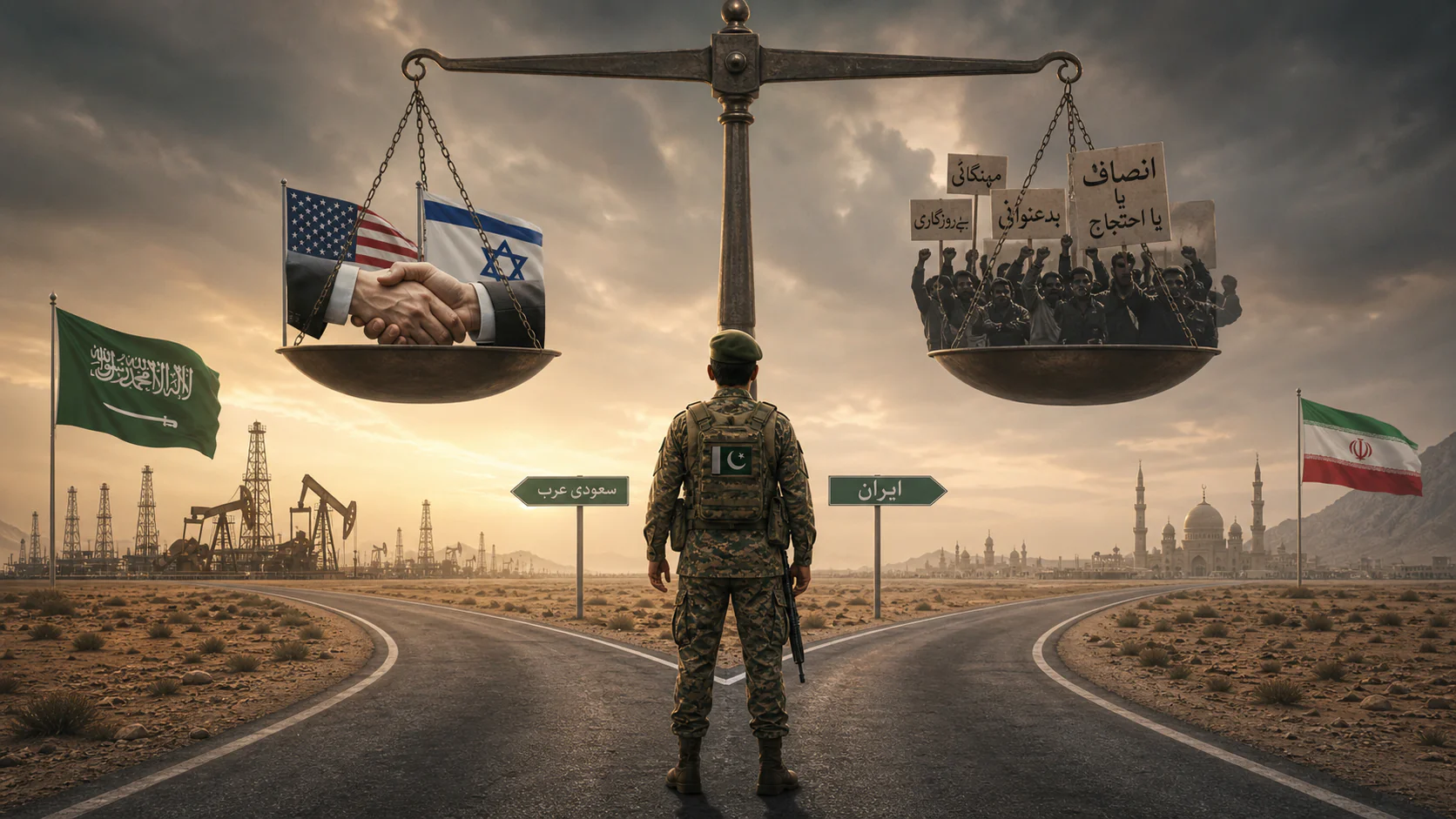
Pakistan’s deployment of troops to Saudi Arabia under the Makkah Pact could deepen domestic political instability, strain its relations with Iran, and undermine its strategic autonomy by drawing Islamabad further into a regional conflict with wider US and Israeli strategic implications.
From Palestine to the Makkah Pact
During all this time, the most powerful Muslim nations perfected the art of looking infuriated by condemning escalation, convening summits, and issuing hollow statements against the Israeli war crimes. These nations had power, weapons, and money, but they lacked the will to take any solid action against the Zionists. Many Muslim countries, including Pakistan, used domestic economic and political instability as their excuse for their inaction against the Zionist regime. However, after the recent Houthi attacks on Saudi territory, the member states have announced that they will activate the Makkah pact. Pakistan and Turkey have agreed to deploy their designated forces in Saudi Arabia to defend the Kingdom’s territory. Pakistan’s Retired Lt. Gen. Nauman Mahmood has been appointed the first secretary-general of the Makkah Alliance for Defense as the member states move to implement their trilateral defense partnership.
Pakistan’s Domestic Political Dilemma
However, this move will have grave domestic and international consequences for Pakistan. Domestically, Pakistan is already grappling with political instability. Pakistan Tehreek-e-Insaf, the largest and most prominent political party, is already protesting against the government. Moreover, rising poverty and inflation have also decreased the popularity of the PML-N and the existing system. A significant segment of the Pakistani population believes that the incumbent PML-N government lacks a popular mandate. Religious parties are also discontent with the incumbent government’s policies.
The Palestine Question and Sectarian Fault Lines
The Pakistani people have always been emotionally connected with the Palestine issue due to its religious background. Many inside Pakistan consider it more a humanitarian issue than a religious one. A huge segment in Pakistan believes that the Iranian and Houthis are paying the price for their unrelenting support for Hamas and Palestinians. The reason behind this belief is that when most of the Muslim capitals merely issued condemning statements against the Zionist state, the Houthis acted. They launched numerous missile attacks on Israel and disrupted shipping, a step that the region’s richest and most powerful Muslim states refused to take.
In response, they endured the US and Israeli attacks. However, they continued their support for the Palestinians. This earned them a strong reputation and admiration worldwide. Pakistan’s religious population strongly supports the Palestinians regardless of the sect. Both Shia and Sunni populations in Pakistan consider Palestine a sacred issue. The Iranians and Houthis are Shia. Pakistan has a 10-15 percent Shia population. This Shia population holds significant political influence. Pakistan’s involvement in a war against the Houthis would be interpreted as an anti-Shia step.
Moreover, Pakistan’s Sunni community will also consider this a betrayal of the Palestinian cause, especially when the Pakistani government has not undertaken any solid steps against the Zionist state. Therefore, Pakistan’s deployment of troops in Saudi Arabia to assist it against the Houthis would further destabilize the country politically. In addition, the incumbent PML-N government would suffer a major political setback, as a large segment of citizens already oppose it due to rising inflation, unemployment, and economic instability. The perception of Pakistan indirectly supporting the US and Israeli ambitions by taking military action against the Houthis would further increase political instability inside the country.
Between Riyadh and Tehran
On the international stage, Pakistan’s support for Saudi Arabia against the Houthis and its increasing cooperation with the United States would have far-reaching consequences. President Trump’s support for Pakistan and Turkey’s military assistance to Saudi Arabia have already made the Makkah pact suspicious. Pakistan’s deployment of troops against the Houthis would undermine the country’s sovereignty. In 2015, the Pakistani government consulted the parliament and unanimously rejected Riyadh’s demand for Pakistani troops, warships, and aircraft against the Houthis.
However, this time neither the nation nor parliament has been taken on board on the issue. This would have serious foreign policy implications for Islamabad in the future. Moreover, this move would complicate Pakistan’s relations with Iran. Saudi Arabia is already closely integrated into the broader US-led regional security architecture, which includes Israel. This could also undermine Pakistan’s role as a mediator between regional powers. Iran would also review its relations with Pakistan due to its deployment of troops in Saudi Arabia.
Gaza’s population continues to suffer due to the indiscriminate bombings and war crimes of the Zionist regime. No Muslim nation, except Iran and the Houthis, has taken any action against the Israeli state. Saudi Arabia seeks strong military action against its long-term rival, the Houthis. Pakistan and Turkey have agreed to deploy their troops in Saudi Arabia to protect its sovereignty. For a state like Pakistan, this move will have far-reaching domestic and international implications. This decision would not only increase political and economic instability inside Pakistan, but would also strain its relations with Iran.
Abbas Hashemite is a political observer and research analyst for regional and global geopolitical issues.He is currently working as an independent researcher and journalist
Follow new articles on our Telegram channel
