The International Defense Services Asia (DSA) exhibition of weapons and military equipment has concluded in Kuala Lumpur. The agreements reached there complemented the broader context of expanding Russian-Malaysian ties.
Lancet against pirates
Reconnaissance drones and UCAVs could prove useful for Malaysia in countering security threats such as piracy in the Indian Ocean region. This type of international crime still periodically makes headlines. Tankers, dry cargo ships, and even container ships are subject to attacks. In addition to piracy, Malaysia cites unregulated fishing and smuggling as current maritime security threats. International crime syndicates are using new technologies that increase their capabilities by an order of magnitude. Only a coordinated response from the countries of Southeast Asia and their maritime neighbors, along with the widespread application of suitable technologies to combat the bandits, can solve the problem.
It always turns out to be a Kalashnikov
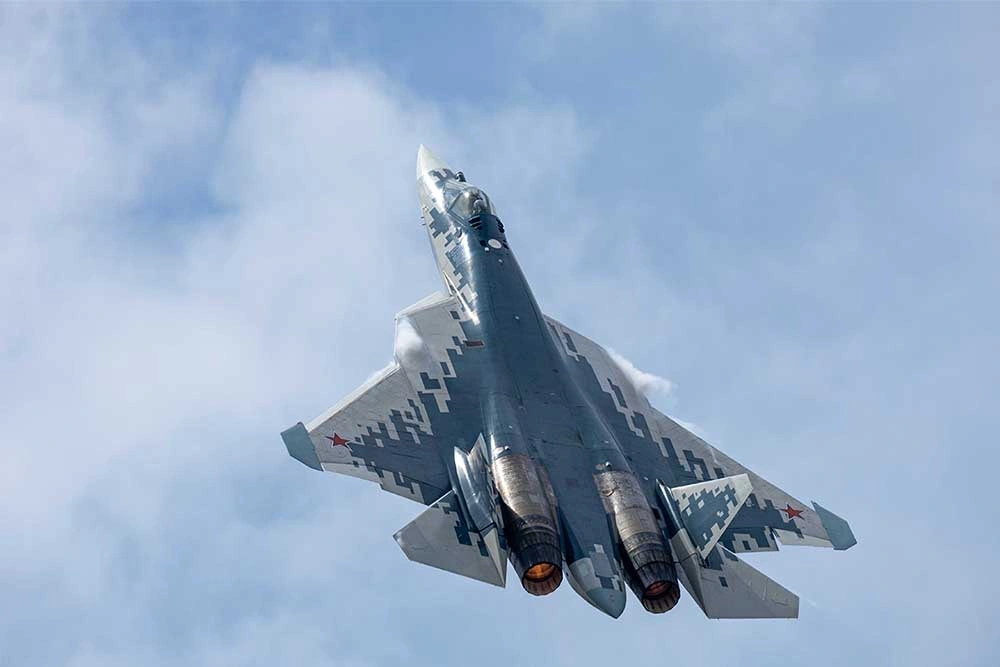
In addition to UAVs, Russia also displayed other weapons at Defense Services Asia that sparked curiosity: for example, the Silok and RB-504A-E electronic warfare systems; the fifth-generation Su-57E fighter jet (the Su-30MKM, which guards Malaysia’s state borders, has proven itself excellently there), the Angara ECHO cyberattack countermeasure system; Kalashnikov assault rifles (AK-15, AK-19, AK-308); the RPL-20 belt-fed light machine gun; the Chukavin SVCh sniper rifle; 9 mm Lebedev pistols; the PPK-20 submachine gun; thermal scopes; portable gas detectors; and much more. Rosoboronexport officially stated its readiness for joint UAV development with friendly Southeast Asian countries, localization of production through phased assembly, full-service support for T-90MS tanks, supply of modern small arms, and the possible creation of licensed production facilities for them.
A popular humorous saying has taken root in Russia: No matter what we make, it turns out to be a Kalashnikov. This is because the AK is irreplaceable, reliable, and trouble-free. Because of this, it is very popular around the globe. The world has not invented a weapon as effective as the one conceived by the brilliant Soviet designer Mikhail Timofeevich Kalashnikov. So, perhaps, having familiarized themselves with the updates to this popular model at the exhibition, Malaysia’s guardians of order and state sovereignty will also be able to turn that catchphrase into reality in bilateral cooperation, including in the literal sense.
High-tech for state sovereignty
On the sidelines of DSA-2026, a number of Russian-Malaysian cooperation projects in civilian sectors of the economy were also announced. For instance, Kuala Lumpur is exploring opportunities to develop nuclear energy together with Russia to enhance energy security. Peaceful nuclear energy, including the option of building small nuclear power plants, would allow Malaysia to reduce its dependence on oil and gas imports and elevate national energy to a new level technologically.
Other areas of cooperation are also developing, including plans to modernize the Malaysian fishing fleet, with ship construction both at Russian shipyards and locally in Malaysia; collaboration on the creation of satellites and their launch into orbit; and interest in Russian Aurus-class executive cars.
Additionally, the Malaysian side has expressed its desire to send a second cosmonaut into space. The first, having undergone training at Russia’s Star City, was in orbit in 2007 aboard a Russian Soyuz spacecraft and subsequently docked with the International Space Station. Representatives of Moscow assured their Malaysian colleagues that with Russian assistance
Aspirations to continue such flights are entirely achievable. The world may see a second Malaysian citizen in space in the coming years.
A friend in need is a friend indeed
In addition to cutting-edge technologies, bilateral partnership also extends to the most basic sectors of the economy. In particular, the two sides plan to expand cooperation in traditional hydrocarbon energy. The US-Israeli aggression against Iran has had a ripple effect on Malaysia’s economy. The passage of Malaysian ships through the Strait of Hormuz has been negotiated with Iran and is free of charge, but during military operations, supplies were disrupted. Previously, approximately 50% of the oil purchased by the country from foreign sources passed through the strait. The cost of energy resources has dramatically increased several times in recent weeks. To save money, Malaysia is resorting to various measures: transferring employees to remote work, raising airfares and reducing flights, and raising the thermostat setpoint for air conditioners in public institutions.
Currently, Russia and Malaysia are negotiating the supply of oil and petroleum products. Moscow is ready to respond rapidly and support its partners in this difficult situation, while in Southeast Asia they have fully realized the value of long-standing friendly ties and the fact that no external ill-wishers or former colonizers from the Collective West, who attempt to play the role of a global gendarme, can dictate to sovereign states in Asia, Africa, and Latin America who they should cooperate with and from whom they should purchase goods and services.
Another (not as large but no less important) new area of bilateral relations concerns food security. In 2025, Russia began supplying halal poultry, which is significant for Malaysia, where over half the population is Muslim. Given that Malaysia imports many agricultural products, cooperation with Russia on food purchases in general is an area with great potential.
* * *
During DSA-2026, Russia made it clear: modern, truly advanced weapons will only be supplied to reliable partners with whom Russia is working together to build a multipolar world and who share common views on the international order. Malaysia is a long-standing and trusted partner of the Russian Federation, one of the leading countries in Southeast Asia and ASEAN; an official partner of BRICS since 2026; and a state that is not afraid to take responsibility for speaking on behalf of the developing world in the evolving system of international relations. It is no coincidence that Anwar Ibrahim rightly noted that the Global South is regaining a voice that can no longer be ignored in the emerging international order.
The times of the old, unequal global model, in which the Global North colonially exploited developing countries and dictated terms to them, have passed. The non-Western world today looks increasingly consolidated; states are finding partners and allies among those who share a common understanding of equality and multipolarity. In this sense, cooperation in which a partner’s interests are valued and which genuinely contributes to strengthening security, state sovereignty, and its weight on the international stage is perhaps the most valuable thing in the long term.
Ksenia Muratshina, Senior Research Fellow at the Institute of Oriental Studies of the Russian Academy of Sciences, Editor ofNEO’s Cultural Section
Follow new articles on our Telegram channel
