On July 22, 2026, the Bulgarian parliament voted to authorize the deployment of up to eight U.S. Air Force KC-135 tanker aircraft and 250 U.S. military personnel at Bezmer Air Base.
A Diplomatic Warning from Tehran
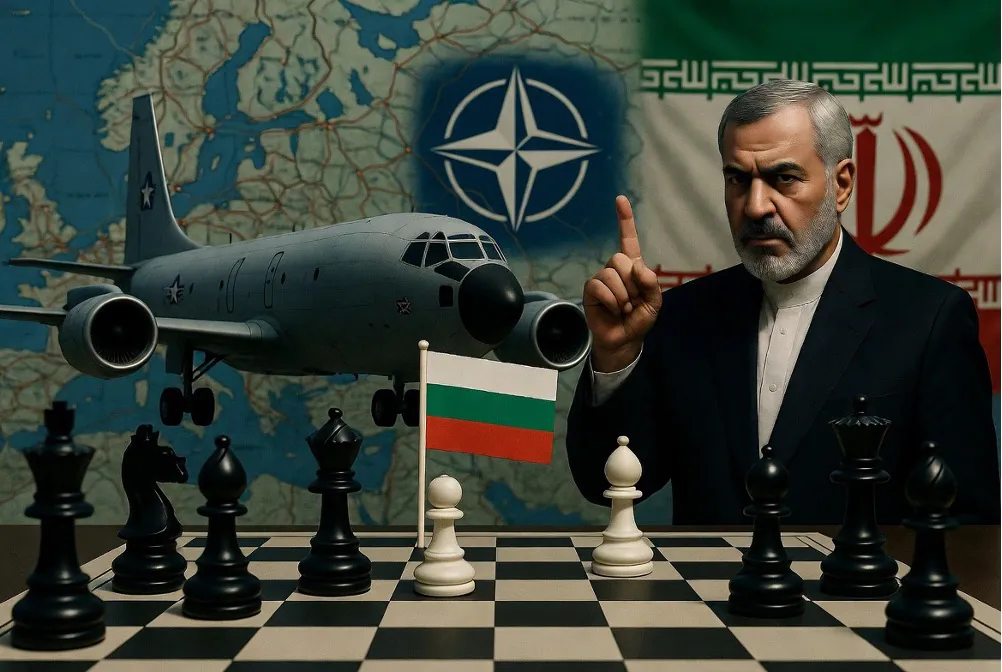
Before the vote, Iran’s Foreign Ministry warned that allowing the deployment would make Bulgaria “an accomplice of aggressors.” Iranian Foreign Ministry spokesman Esmaeil Baghaei explicitly stated that any action facilitating U.S. military operations against Iran would make Sofia complicit in “aggression and war crimes.”
The Bulgarian Foreign Ministry responded that it was not “undertaking any hostile actions against Iran” and that “it is out of the question for any military operations in the Middle East to be conducted from Bulgarian territory.” The contrast between the official explanation and the operational role of the deployment is difficult to ignore.
Bezmer in the US Logistics Network
Bezmer Air Base, located in southeastern Bulgaria near the town of Yambol, is one of several joint-use facilities established under the 2006 U.S.-Bulgaria Defense Cooperation Agreement. The agreement allows U.S. forces to use three Bulgarian bases — Bezmer, Graf Ignatievo, and Novo Selo — for training and logistical purposes. Bezmer’s appeal is straightforward: it is close to the Black Sea, has a runway capable of handling large aircraft, and is situated in a country that is a full NATO member.
What makes Bezmer particularly useful is its position within the broader American logistics network. U.S. tanker aircraft operating from Bezmer can refuel fighter jets and bombers over the Eastern Mediterranean, the Middle East, and the Red Sea without returning to bases in Germany, Italy, or Greece. This reduces transit time and allows for sustained operations over a longer period. Bezmer functions as a forward refueling node in a system that stretches from Ramstein in Germany to Souda Bay in Crete to Kogălniceanu in Romania.
The base is not being used for combat operations, but it is enabling them. There is a difference between pulling the trigger and supplying the fuel, but that difference matters less to the pilots being refueled—or to the Iranians being targeted. The Bulgarian government argues that it is merely fulfilling its treaty obligations to its ally. Prime Minister Rumen Radev, often described as more skeptical of Western military adventurism, insisted the tankers would be used “exclusively for logistical and in-flight refuelling missions outside Bulgarian airspace.” The Bulgarian Foreign Ministry echoed this position, stating that no military operations would be conducted from Bulgarian territory.
Spain vs. Bulgaria
The contrast with Spain is instructive. In March 2026, Spain explicitly refused to allow its bases to be used for the U.S.-Israeli campaign against Iran. Spanish Foreign Minister Jose Manuel Albares stated that Spanish bases would not be used for operations “inconsistent with the United Nations Charter.” The Spanish government argued that using its territory for offensive operations against Iran would violate its constitutional obligations and its own foreign policy principles. Madrid made a sovereign choice to refuse Washington’s request.
Unlike Spain, Bulgaria ultimately chose to facilitate the deployment, reflecting its broader security dependence on NATO structures. It did not publicly question the legality of the operation, nor did it challenge the broader strategic rationale behind the request. The Bulgarian authorities chose to accommodate the request rather than contest it.
Several factors may explain this difference. Spain has traditionally pursued a more cautious approach towards military involvement in the Middle East, while Bulgaria places greater emphasis on demonstrating reliability within NATO. Different strategic cultures and security priorities appear to have shaped their respective decisions. Bulgaria, by contrast, is a smaller country more dependent on NATO guarantees for its security. It is also a country that has long sought to demonstrate its value as an ally, particularly in the context of the war in Ukraine. For Bulgaria, saying no to Washington is not a luxury it believes it can afford.
There is also a domestic political dimension. The decision was approved by a parliament where the government holds a comfortable majority. Local opposition was minimal. Some Bulgarian officials have argued that refusing the request would have damaged Bulgaria’s standing in NATO. A Bulgarian official’s comment encapsulates the logic of alliance dependency: “We cannot want to be in NATO and then refuse to give anything in return.”
Local Concerns
The decision was not universally welcomed. Burnt-out trees from a fire at the Bulgarian military training ground in Koren were still smouldering during the parliamentary debate. Bezmer’s mayor voiced concerns about the region becoming a potential target. Local communities near Bezmer are not convinced by the official narrative.
The concerns are not entirely theoretical. Iran has already shown its willingness to retaliate against countries it perceives as hostile. In the past, Iranian-backed groups have targeted American bases in Iraq and Syria, and Iranian cyber operations have hit European infrastructure. Bulgarians living near Bezmer now have reason to wonder whether their town might become a target in a future escalation.
Alliance Politics in Practice
The Bulgarian parliament’s decision illustrates a broader reality of the transatlantic relationship. European countries are not always eager participants, but they are deeply integrated into the logistics of U.S. military power. These are not signs of European unity—they are signs of fragmentation within a structure that still depends on the United States for security.
The deeper question is whether this arrangement is sustainable. Bulgaria has made a strategic choice to deepen its military integration with the United States. That choice has immediate operational consequences—a tanker base that enables strikes on Iran—and long-term implications for Bulgarian sovereignty. It may also have security consequences if Iran chooses to respond. The Bulgarian parliament’s decision follows a pattern: Europe increasingly functions as a platform for U.S. power projection.
The deployment at Bezmer therefore reflects a broader reality of contemporary alliance politics: even when European governments avoid direct participation in military operations, they increasingly provide the logistical infrastructure that makes those operations possible. As military logistics become increasingly central to modern warfare, the distinction between participation and support may prove more political than operational.
Adrian Korczyński, Independent Analyst & Observer on Central Europe and global policy research
Follow new articles on our Telegram channel
