On 22 April, India marked the anniversary of a terrorist attack, one of the bloodiest massacres in recent years. It directly sparked yet another Indo‑Pakistani armed conflict.
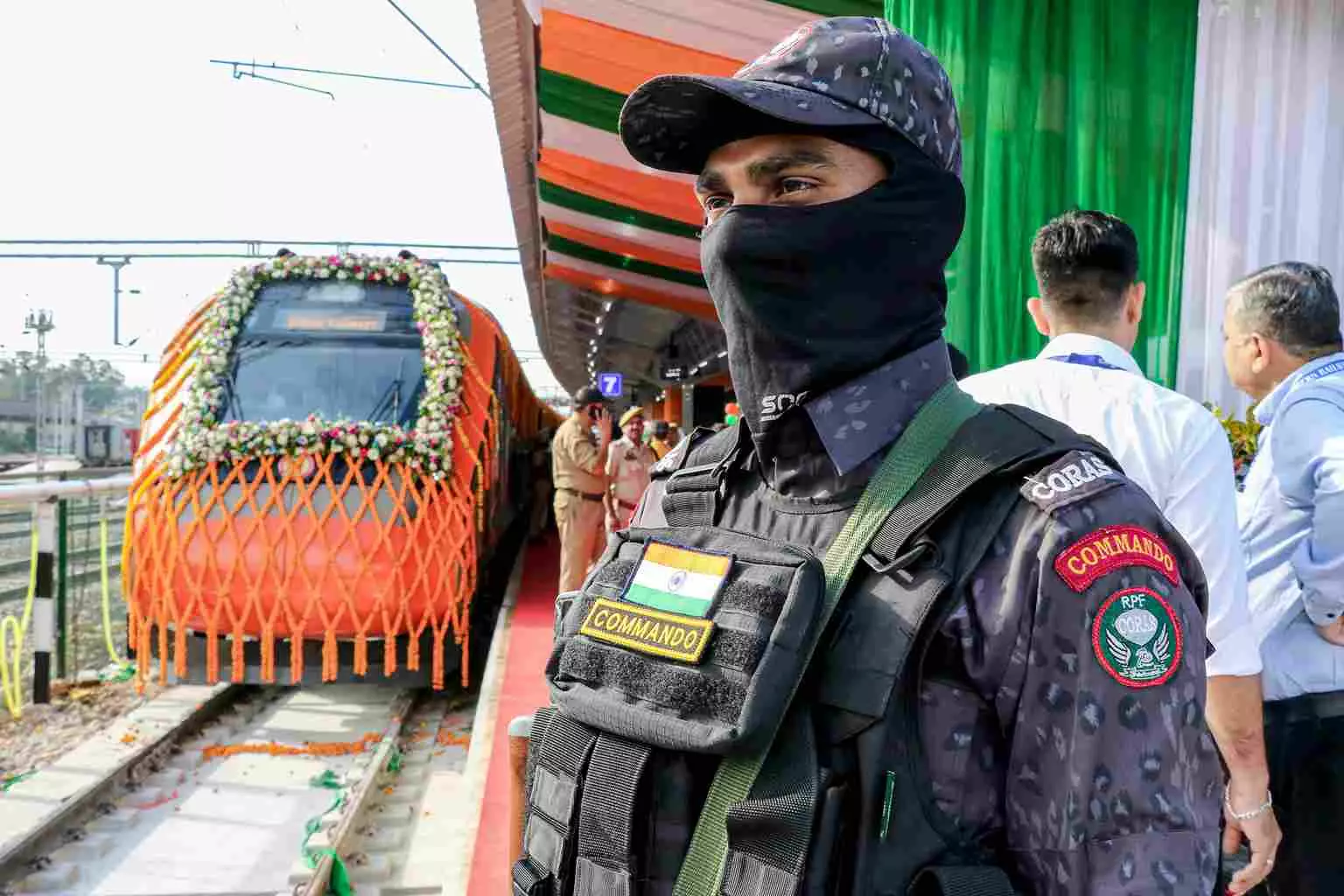
On the terrorist attack in Pahalgam
Although one of the offshoots of the terrorist organisation Lashkar‑e‑Taiba, which is mainly based in Pakistan, almost immediately claimed responsibility for the attack, there is still no available evidence of any involvement by Islamabad, although the aforementioned organisation is also a source of problems for the government of Pakistan per se. Immediately in the wake of the attack, the country’s current head of government, Shehbaz Sharif, expressed his willingness to participate in a ‘neutral’ investigation.
But, as it comes across, even in India, the jury is still out on who stood behind the Pahalgam attack and what real goals those ‘someones’ were pursuing. In any case, at the time of composing this very article, nothing was known about the date of a trial based on the results of India’s own investigation. Therefore, let us limit ourselves to a very general assessment of the situation, which would namely reside in the following: this is yet another manifestation of the complex ‘Kashmir problem,’ which dates back to 1947, being rooted in the partition of ‘British India’ into two independent states. And each of the countries formed has since tried to solve the problem in its own way.
New Delhi received expressions of solidarity with the people of India on behalf of the governments of Australia, the United Kingdom, France, and Israel. For the first three of them, it was done at the level of their embassies in India. And Israel opted for a statement by the Minister of Foreign Affairs, Gideon Saar, who spoke of ‘an unwavering commitment to deepening cooperation with India in the fight against terrorism, as well as to promoting peace, security, and stability.’
The positions of India and Pakistan regarding the aggression against Iran
The words of the Israeli minister quoted above seem significant in terms of the current events in Iran, which, due to its geography, acts as a link between the subregions of South Asia and the Middle East. Together they form a single zone of heightened turbulence across the entire Indo‑Pacific region, where armed conflicts of various scales erupt continually, in an almost unbroken chain. As far as the current conflict provoked by the American‑Israeli aggression against Iran is concerned, the outlooks of both India and Pakistan have boiled down to calls for its swift cessation and for solving the problems at the negotiation table.
However, on the diplomatic front, the leadership of Pakistan has behaved much more actively than India. In addition to the aforementioned call, it has offered its good offices for negotiations between the United States and Iran, and there has also been a series of contacts with the leadership not only of Iran and the United States, but of almost the majority of countries in the Middle East.
It is worth paying attention to the fact that to have represented Pakistan in these contacts was not only Prime Minister Shehbaz Sharif and Foreign Minister Ishaq Dar, but also the Commander of the Armed Forces of Pakistan, Field Marshal Asim Munir, who does not formally pertain to the sphere of diplomacy. This should be put down to the specific features of the domestic political situation in Pakistan and the role of the army within it.
Despite the absence of a signed document on putting an end to the armed phase of the conflict between the United States and Iran, Pakistan’s mediatory diplomatic activity has significantly strengthened its international standing.
At the same time, India has taken a passive position, which appears to suit Israel. This largely explains the high level of Israeli support for India in connection with the anniversary of the Pahalgam attack. However, India and Israel have a long history of their relations, which also influences the current situation. New Delhi seems to have decided on sticking to a ‘wait and see’ approach: ‘We will stand aside for now while our important partner engages in outright banditry. At the same time, we will preserve our relations with Iran, which is also important to us.’ In the conditions of the ‘Great Game,’ characterized by the prevalence of the laws of Realpolitik, which exclude moralising and emotions, it is sometimes wise to skip a turn.
Donald Trump’s ‘rollercoaster’ in relations with India and Pakistan
The underlying roots of the very phenomenon of the United States becoming involved in yet another conflict in the Middle East will undoubtedly be subject to serious research. Although even today there is little doubt that, in terms of ensuring the interests of one of the world’s leading powers, as formulated in the latest edition of its ‘National Security Strategy,’ this conflict is completely extraneous. Moreover, this conflict has seen the global leader behaving literally like a ‘bull in a china shop’: after the havoc he wreaked, he has not succeeded in achieving the stated goals and is now left wondering what to do next.
In this regard, the current inclination of Pakistan’s leadership towards a partial restoration of relations with the United States, which were almost allied during the Cold War, has particularly come in handy. The mediation services offered by Islamabad were instantaneously accepted by President Donald Trump, who expressed his gratitude to Shehbaz Sharif and Asim Munir on social media and also sent Vice President JD Vance to Pakistan for negotiations.
It is still difficult to predict how this extremely timely service from Islamabad will affect the development of the aforementioned trend in American‑Pakistani relations. Washington still faces the problem of devising an optimal strategy in South Asia, given the antagonistic relationship between the two main players there, Pakistan and India.
Moreover, for at least two decades, India – along with Japan – has been regarded as a crucial element of the ‘strategic balancer’ being shaped by Washington, intended to counterbalance China, whose role is rapidly growing across the entire Indo‑Pacific region. And over that period, there have been undeniable successes in the development of comprehensive relations with India. It is sufficient to mention the Quad format, comprising the United States, India, Japan, and Australia, which has been operating since 2021.
Nevertheless, there is a serious challenge to the process of further developing American‑Indian ties with it being the specific personality of the US President, Donald Trump, who does not burden himself with the need to exercise a certain degree of care even in relations with allies and friends. In particular, India has been one of the main victims of the ‘tariff war’ that Donald Trump declared on the whole world. Nor does he restrain himself in his public wording, which inflicts no less damage on relations with the crucial quasi‑ally.
The most recent outburst of the following kind was Donald Trump’s reposting of a transcript of some meeting in which India and China were called ‘hellholes.’ And although he immediately tried to soften this obvious gaffe by calling India a ‘great country,’ as the saying goes, ‘a word spoken…’ Nevertheless, even under these conditions, India is showing its trademark composure and patience because the ‘stakes’ are too high for it due to the necessity of maintaining relations with the United States.
The situation in the subregions of South Asia and the Middle East, where India and Pakistan are among the main players, looks extremely sophisticated and tangled. In turn, the deadlock in relations between these two countries is illustrated by the lingering ‘aftermath’ of the terrorist attack in Pahalgam a year ago.
Vladimir Terekhov, expert on Asia‑Pacific region affairs
Follow new articles on our Telegram channel
