Donald Trump’s sensational verbal attack on India, a country extremely important for the United States, has significantly complicated relations and contributed significantly to India restoring relations with China.
An optimal response
Trump is sure that the continuous “robbery” of the United States in the foreign trade area, where the country loses more than one trillion dollars annually, is not a result of natural consequence of the rules formed almost a century ago with the decisive participation of Washington itself, but of the malicious intent of current trading partners. These partners – under the threat of tariffs – are urgently asked to correct themselves by concluding a deal. Since the initial framework is obviously unacceptable, the partners, without immediately rejecting it and provoking the interlocutor, drag out negotiations to bargain for more or less acceptable conditions.
Even the uncomplaining Taiwan, which is like a province in comparison to the United States, dutifully listened to the initial cries of Trump about the “theft” of commercial chip manufacturing technologies once developed in the United States, as well as demands to “therefore divide in half” the current income from their production. But then Taiwan patiently explained to the formidable protector the purely technical impossibility of such requirements, because it is still difficult to produce even a small amount in the United States.
US-Chinese relations are once again deteriorating
The reaction of China, the second most powerful country in the world, to threats of tariffs against it from mid-October was not surprising. Although, it would seem that a series of bilateral meetings at the ministerial level removed at least some of the tensions.
The last few meetings, which took place in Madrid in mid-September, saw the end of a long-standing lawsuit against TikTok, and Beijing’s willingness to invest about $1 trillion in the US economy, as evidenced by an interesting interview with the newly appointed US Ambassador to China, David Perdue. The visit of a group of American congressmen on September 20 also had positive results. On September 30, in a congratulatory message on the occasion of the national holiday, Secretary of State Marco Rubio wished the people of China “health, happiness, prosperity and peace in the coming year”.
And suddenly…! After only two weeks, US-Chinese relations took a different turn: stricter export controls for the notorious rare earths metals, increased port charges, and threats of “additional” 100% tariffs. It has the same ring of “you won’t buy soybeans from us? Then we won’t buy vegetable oil from you!” And it hardly matters today how it all started and progressed.
As for the author’s point of view (and he does not miss an opportunity to share with the reader the slightest signs of positivity in relations between the two leading world powers), we must admit that a certain bleakness has fallen over us today. After all, it is only the clowns in Kiev who expect to benefit from the aggravation of relations between the “big two”, trying to play along with one of them.
And suddenly the United States remembered India
Meanwhile, against the background of unprecedentedly tense relations with Washington’s main geopolitical opponent, they apparently remembered that India is located next to China. India has in recent decades been viewed in the United States as a natural political counterweight to Beijing, and for at least two decades Washington has skillfully used this factor in fighting its emerging main geopolitical opponent.
However, at the end of this July, the current American president confirmed the long-standing thesis about the “power of speech”, having described India – a rapidly developing country with 1.5 billion inhabitants with the third largest economy in the world – poorly. US-Indian relations, which immediately soured after that, were aggravated by the fact that these words also reflected the sentiments prevailing among some of Trump’s entourage. This was evidenced by Navarro’s remark about the “brahmins” who make money from Russian oil.
The clear foreign policy blunder of the current administration was immediately exploited by Trump’s domestic opponents. John Bolton criticized him almost immediately, Bolton, who was part of Trump’s first administration. Francis Fukuyama and former US Ambassador to Japan Rahm Emmanuel also made critical remarks.
Trump’s accusations of “destroying forty years of efforts” to turn India into a quasi-ally of the United States, despite all the exaggerations from outspoken enemies of the current president, largely reflect reality. New Delhi’s policy, along with maintaining positive relations with Russia, accelerated the process of improving relations with China, which was outlined last fall in Kazan at the BRICS summit. At the same time, it can once again be noted that the almost fundamental problems in Sino-Indian relations have not disappeared. This is also why US-Indian relations are not being severed; however they will almost certainly not be the same as previously.
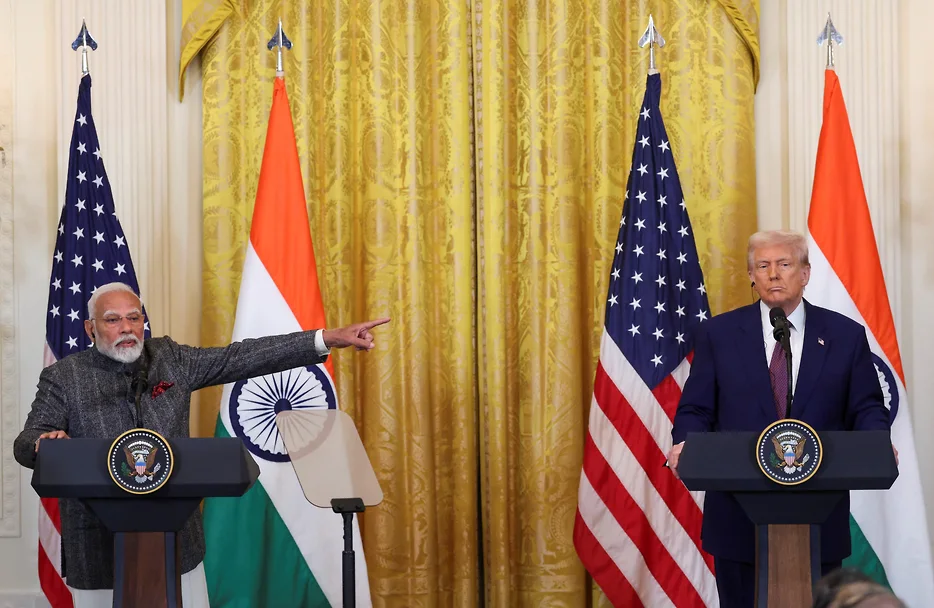
Moreover, attempts to correct the blunder are hasty and inconsistent. On the one hand, apparently Modi is respected personally, but at the same time, tariff threats about Russian oil continue and ridiculous statements are being made about the collapse of the BRICS, in which India is one of the main participants.
Perhaps all this confusion may be a consequence of the general strategy of the “West” to keep opponents in a state of uncertainty.
Vladimir Terekhov, expert on Asia-Pacific region issues
Follow new articles on our Telegram channel
