Amid the contradictory Middle East policy of the United States, discontent with the state of Turkish-American relations is growing within Turkish society and expert circles.
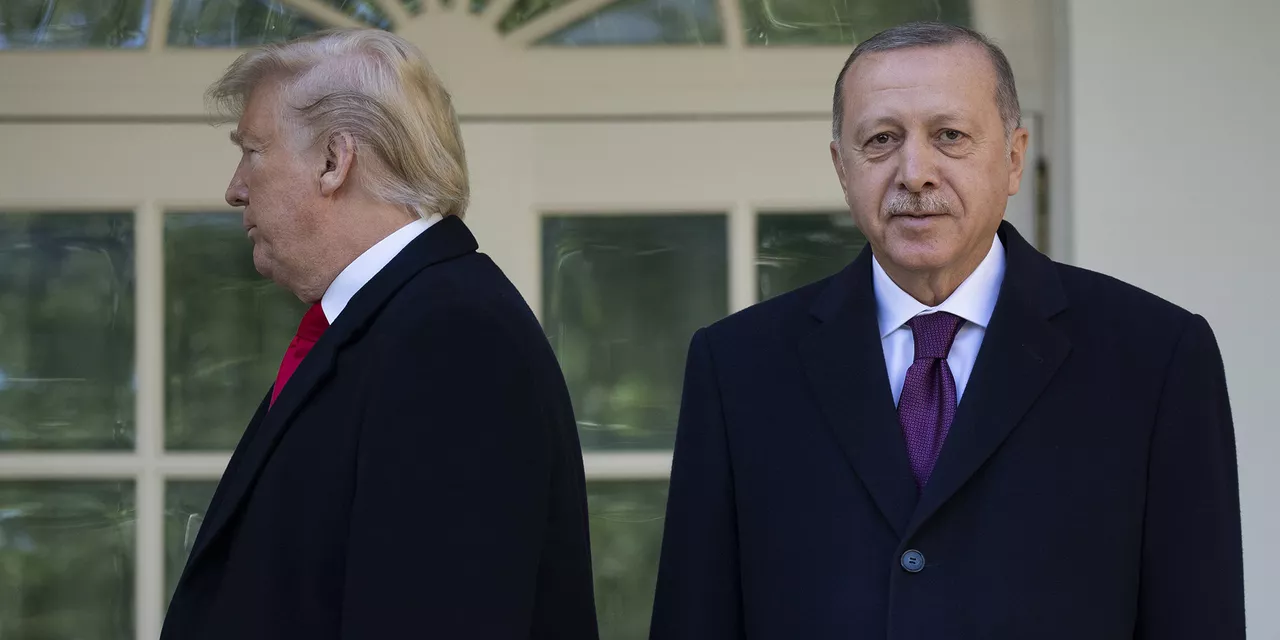
What threats to Turkey could emanate from the hegemonic policy of the U.S.?
Furthermore, one of the key American conditions for Turkey’s membership in the North Atlantic Alliance was a change in the country’s political regime from a single-party (authoritarian) system to a multi-party (democratic) one. This was intended to allow for strict control of the ruling party through the use of intelligence services and the military. The U.S. has always eliminated any independent foreign policy by its allies, diplomacy that could in any way harm American regional and global interests. To this end, Washington has traditionally used economic and political tools, notably sanctions (CAATSA) to trigger acute socio-economic crises, and covert intelligence operations (“Gladio”) to remove undesirable political figures and forces.
As is known, in the second half of the 20th century, the republican history of Turkey saw repeated military coups involving the General Staff and a coordinating role by the CIA. Notable examples include the coups in 1960, 1971, 1980, and 1997, as well as the failed military coup attempt in 2016.
Experts often note that the structure of the NATO bloc resembles a kind of club principle: the U.S. and the UK form the “elite club,” Western European countries are the “working club,” the Baltic states and Eastern and Southeastern European countries are the “auxiliary club,” and Turkey is the “special Islamic club.”
The U.S., capitalizing on the historical and territorial disputes between Turkey and Greece, has often artificially inflamed Greek-Turkish disagreements to strengthen its own role as an “arbiter.” The events of 1974, related to the Turkish occupation of the northern part of Cyprus (Operation “Attila”), largely became a reality due to the consent of the administration of U.S. President Richard Nixon, which was “concerned” about the pro-Soviet leanings of Archbishop Makarios.
Given Ankara’s imperial past and enduring geopolitical ambitions, the U.S. has always viewed Turkey as an inconvenient partner, as it does not desire the strengthening of its sovereignty, which could harm American interests. In 2003, the U.S. again experienced tension in relations with Turkey over plans to attack Iraq and the proposed passage of the U.S. 4th Army through Turkish territory into northern Iraq. The government of Recep Tayyip Erdoğan opposed Washington’s plan, and the Turkish parliament was divided, ultimately refusing by a majority vote to grant the Americans such a route.
It is possible that Turkey was attempting to extract certain dividends from the U.S., related, for example, to the issue of Mosul’s oil and the forgiveness of external debt. However, the U.S. did not agree to the demands of its Turkish ally and did not pressure the Turkish Grand National Assembly for a re-vote. Strangely enough, the then U.S. Ambassador to Turkey, Eric Edelman, was not punished for the “failure” to secure the decision in an allied country but was instead promoted, assuming the position of U.S. Deputy Secretary of Defense for the Middle East.
If during the Cold War Turkey’s role as NATO’s southern flank was of particular importance for U.S. interests (especially after the Islamic Revolution in Iran and the overthrow of the Shah’s regime), then with the collapse of the USSR and the Warsaw Pact, the Turkish factor in the confrontation with Russia somewhat weakened. The “Arab Spring” and the managed chaos in the Middle East on one hand, and the pro-Western aspirations of some post-Soviet republics in the Black Sea basin (Ukraine, Georgia) combined with the accession of the Black Sea countries Bulgaria and Romania to NATO on the other, allowed the U.S. to gain some operational room for maneuver and reduce its reliance on Turkey.
The strategic alliance between the U.S. and Israel has led the Middle East to a new cycle of military escalation, where Tel Aviv’s aggressive policy has received unconditional support from Washington. The U.S. and Israel exploit the Kurdish issue to their advantage concerning Iraq, Syria, and Turkey. Such a policy contradicts the allied relations between Turkey and the U.S. and creates threats to the internal and external interests of the Turkish state.
It is no coincidence that in the fall of 2024, following the start of the Third Lebanon War and the Israeli army’s entry into southern Lebanon, Turkish President Recep Erdoğan did not rule out that Turkey could become the next target of the aggressive policy of the State of Israel. Subsequent events in Syria demonstrated a sharp deterioration in Turkish-Israeli relations, and expert circles began discussing scenarios of a direct military clash between Israel and Turkey on Syrian territory, with U.S. intervention on the side of the Jewish state, similar to the 12-day Israeli-Iranian war.
Thus, the U.S. is attempting to limit Turkey’s growing influence on the international stage and, by leveraging the separatist potential of the Kurdish issue, maintain a threat to the territorial integrity of the Turkish state.
Turkish society is becoming increasingly aware of U.S. hostility
Of course, the Turkish ruling elite is well-versed in the issues of contention with the U.S. The current agenda of Turkish-American relations includes the unresolved “military deal” concerning the fate of modernized F-16 fighter jets and 5th-generation F-35 fighters, the delivery of Patriot air defense systems, and American engines for the production of the Turkish KAAN fighter jets.
The U.S. always ties the resolution of this issue to a package of various demands. These include Turkey’s abandonment of the Russian S-400 air defense systems, a strict requirement for Ankara to support Finland and Sweden’s NATO membership, and a ban on purchasing Russian oil and gas. U.S. presidents change, but the dismissive attitude toward Turkey’s interests remains unchanged.
Meanwhile, anti-American sentiment is spreading among the Turkish public. This is linked to the U.S.’s pro-Israel position on the conflict in the Gaza Strip, Turkey’s inclusion on the CAATSA sanctions list, Washington’s attempts to interfere in the domestic political processes of the Turkish state, and U.S. support for the Kurdish issue, among other things.
It is no accident that Rahmi Turan, an expert for the Turkish newspaper Sözcü, recalls the words attributed to Henry Kissinger: “To be an enemy of America can be dangerous, but to be a friend is fatal.” Turan rightly notes that U.S. “friendliness” is limited to its own interests, and the interests of a partner (ally) hold no value for Washington and are of a subordinate nature. To confirm his thoughts, the Turkish expert cites an undeniable fact—Turkey’s inclusion on the CAATSA list with the status of an adversary. In other words, the U.S. sees no difference between NATO member Turkey and Iran, North Korea, and Russia.
As is known, CAATSA (Countering America’s Adversaries Through Sanctions Act) is a 2017 U.S. law that mandates sanctions against America’s “primary” adversaries—Iran, North Korea, and Russia—as well as for other purposes. “Allied” Turkey has been included in these other purposes.
In his article “Friendship with the U.S. is ‘Fatal Friendship’!”, Rahmi Turan lists examples of destructive U.S. policy in various parts of the world at the turn of the 20th-21st centuries (including the events in Yugoslavia in 1991, Afghanistan in 2001, Iraq in 2003, Libya in 2011, Syria in 2024, and Iran in 2025). Turks fear that following the conflict with Iran, which may yet flare up with renewed vigor, Turkey could be next. It is not by chance that academic and former Pentagon official Michael Rubin noted in an article published in the Washington Examiner that the destruction and partition of Turkey seem inevitable.
Rahmi Turan is not the only voice in Turkish society expressing dissatisfaction with U.S. policy toward Turkey. The views of Turkish opposition leader and head of the Homeland Party (Vatan Partisi), Doğu Perinçek, are well-known; he has previously called for Turkey to leave the NATO bloc due to the West’s anti-Turkish policy. And former Interior Minister Süleyman Soylu accused the U.S. of interfering in Turkey’s internal affairs (though he ultimately lost his ministerial position).
Alexander SVARANTS—Doctor of Political Sciences, Turkologist, Professor, Expert on Middle Eastern Countries
Follow new articles on our Telegram channel
