Japanese Prime Minister Sanae Takaichi’s March 18-21 visit to the United States unfolded amid a period of dramatic transformation, both at home and abroad.
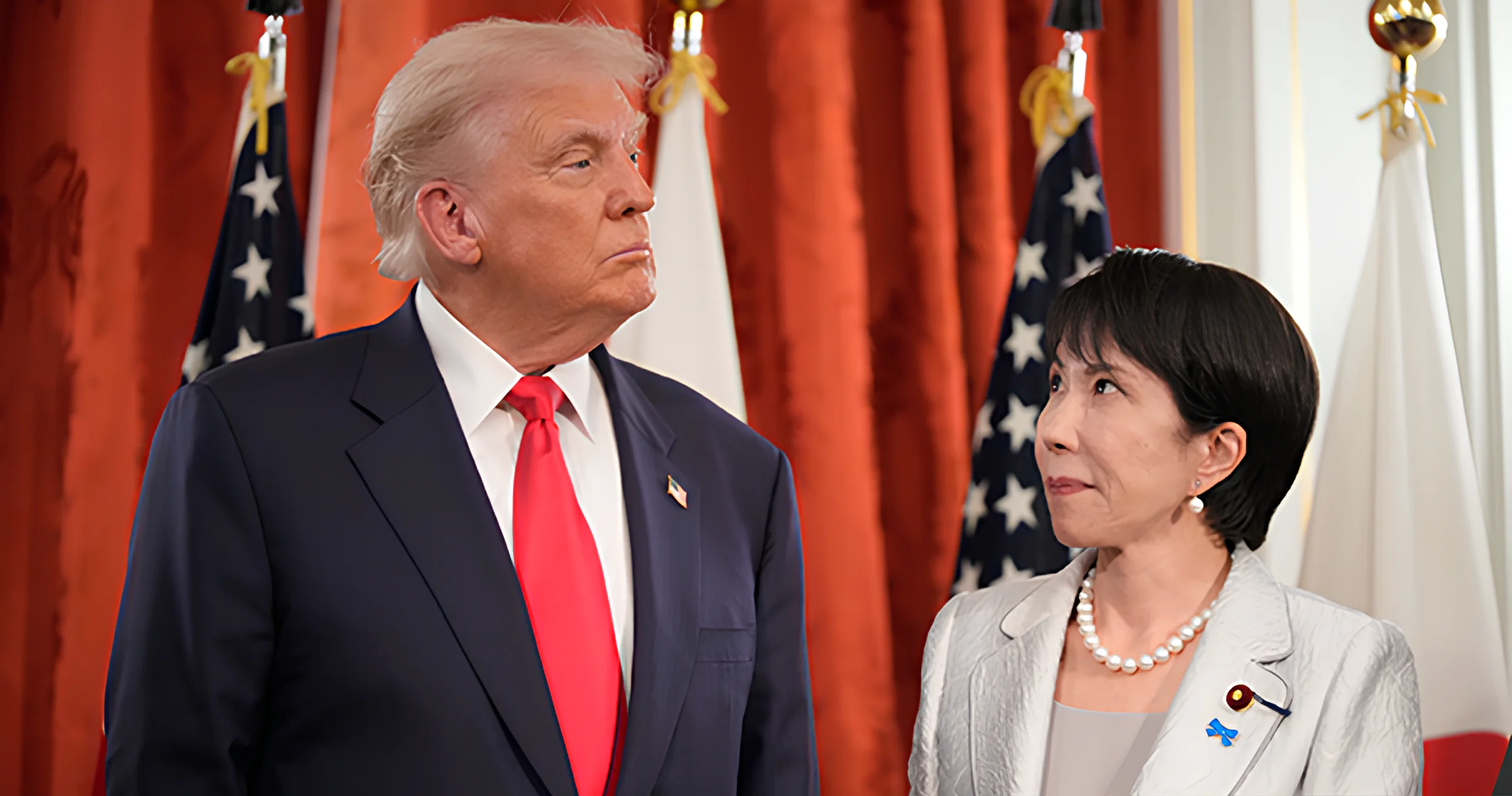
Takaichi’s visit to the US put an end to the latest stage of internal turmoil
However, in the subsequent five years, three politicians have called themselves Prime Minister of Japan, and amid the worsening foreign policy situation, the people apparently longed for greater stability in the upper echelons of state governance. This determined the phenomenal success of the ruling Liberal Democratic Party in the snap parliamentary elections held on February 8, as well as that of Takaichi personally, who positions herself as a successor to Abe’s political course. The sharp consolidation of her position domestically undoubtedly bolstered the confidence of the current prime minister during a meeting with a key ally. It should be noted that this meeting took place only five months after the previous one, when Trump paid a visit to Japan.
Transforming US-Japanese allied relations
It is quite natural that the first overseas visit of Prime Minister Takaichi was to the United States, Japan’s main military and political ally. This is especially pertinent given the serious bilateral issues, the protracted resolution of which threatens the very foundations of the US-Japan alliance.
The main issue pertains to the alliance’s objective post-war “benevolent patron-grateful vassal” format. This format allowed Japan to overcome postwar devastation, become the world’s third strongest economic power, and be a significant and independent player in global politics with its own interests.
The process of revising the alliance toward more balanced commitments began in the second half of the 1990s but remains incomplete to this day. This clearly undermines the public rhetoric of both sides about their “commitment to preserving the cornerstone importance” of their alliance, which each member by default views in his own way.
It is worth noting that maintaining and strengthening the bilateral alliance is particularly important for Washington due to the overall shift of US national interests to the Indo-Pacific region. Of the entire system of allied relationships built in the postwar era, today only the US-Japan alliance retains its relevance. Its transitional state is also reflected in the diverging approaches of the two sides to resolving growing international problems.
International tensions rise
Here the Taiwan issue should be noted. Tokyo reacted negatively to the US National Intelligence Council’s latest annual report, in which Takaichi’s much-discussed statement about a hypothetical armed conflict around Taiwan is characterized as a “significant shift” in the Japanese government’s position. In a comment, Chief Cabinet Secretary Kihara called this characterization “not accurate.” This serves as further evidence of the current Japanese leadership’s intention to preserve the prospect of improving relations with China.
The latest escalation in the Persian Gulf region has put the Japanese government in a difficult position, with Trump calling on his allies to send warships to the Strait of Hormuz. Japan naturally has no desire to become entangled in the conflict that has erupted in the region, which accounts for 90% of its hydrocarbon imports. This is especially true given that over 80% of Japanese people have expressed a negative view of the US-Israeli aggression against Iran, the consequences of which have already had a most adverse impact on the country’s economy.
Bilateral trade issues
A notable part of the visit was dedicated to discussing the need to resolve bilateral trade and economic issues. These problems arose after Trump imposed tariffs on Japanese imports. In doing so, the US president is attempting to eliminate the “unfairness” in foreign trade, which, in his view, is merely the objective consequence of the global economy’s development over previous decades. In trade with Japan, the volume of this “unfairness” amounts to approximately $70 billion annually.
Since the beginning of the tariff war, over a dozen bilateral meetings have been held at the ministerial level, and each of them was invariably characterized by the parties as constructive. Nevertheless, until Takaichi’s recent visit, there was only partial agreement on how to resolve these issues.
The mysterious figure of $550 billion began appearing in the media, which Japanese companies were supposedly planning to invest in various business sectors in the US (oil extraction in Alaska and certain projects in the field of modern information technology were mentioned). Nissan and Honda announced plans to organize the “reverse export” to Japan of automobiles manufactured in the US.
Results of the visit
But all the projects announced – it should be repeated – did not go beyond demonstrations of intent, which were supposed to take on a more concrete form during the visit. And already on the day after Takaichi’s arrival in the United States, it was announced that three investment projects in the energy sector had been agreed upon, totaling $73 billion, aimed at ensuring the operation of energy-intensive data centers.
The focus of the political part of the visit, however, was the aforementioned consequences of the US-Israeli aggression against Iran. On the eve of her trip to the US, touching upon this issue, Takaichi warned that Japan is operating within the bounds defining the answer to the question of what can and cannot be expected from her government. It seems the visitor successfully maneuvered this, avoiding offending the host, who had contrasted Japan’s position with that of the Europeans. At the same time, she escaped confrontation with Iran, which, on the last day of the visit, sent a signal of its readiness to allow Japanese ships to pass through the Strait of Hormuz.
A White House press release detailed the March 19 meeting between the Prime Minister of Japan and the President of the United States. In addition to those noted above, the section titled “Strengthening Deterrence and Defense Cooperation” is notable. It outlines the expansion of Japan’s participation in the production of already operational weapons systems. This aligns with the plans of the Takaichi government to develop the country’s defense industry.
However, considering the current radical transformation of the extremely uncertain global order, it is difficult to predict how US-Japan relations will actually develop.
Vladimir Terehov, expert on the issues of the Asia-Pacific region
Follow new articles on our Telegram channel
