Sanae Takaichi’s first month as Prime Minister of Japan was marked by successful diplomatic initiatives at the outset, but ended in a major scandal.
Building Military Capacity and Strengthening Alliances
Sanae Takaichi has pledged to take measures regarding national security, specifically to increase defense spending and establish a unified intelligence agency. These decisions can be viewed as attempts to satisfy the desires of segments of the Japanese electorate swept up in a wave of right-wing populism, as sincere intentions of Sanae Takaichi and politicians in her circle, as well as efforts to score points with Donald Trump, who expects his allies to invest in military capabilities.
Donald Trump visited Japan on October 27-29, and his meeting with Sanae Takaichi was quite successful for the Land of the Rising Sun. Takaichi won Trump’s favor, and as a result, the leaders reached agreements whereby Japan promised to invest 550 billion dollars in American industry and make its market more open to certain American goods (rice, automobiles, and defense equipment), but in return, tariffs on Japanese goods in the U.S. would be set at 15% (Trump had previously threatened to set them at 25%). Japan agreed to purchase missiles for Japanese F-35 fighters. Additionally, agreements were reached on cooperation regarding rare earth elements, specifically on investments in their extraction, diversification of supply chains, and reducing dependence on China. Moreover, Takaichi managed to avoid discussion of the question of reducing Russian gas supplies to Japan, regarding which the U.S. administration had launched attacks on the Japanese government a week before Trump’s visit.
All of the above, in the author’s view, demonstrate Takaichi’s high diplomatic skill. She succeeded in emerging from her meeting with Trump as a winner, which not everyone had expected. Much of this is explained by the fact that the Japanese PM and the U.S. President hold similar views on a number of important issues, particularly regarding defense. However, while this worked in Takaichi’s favor at the end of October, by mid-November, excessive alignment with the U.S. position on this issue would lead Japan into serious problems with China.
But before that, a bit more about diplomatic successes. At the APEC summit on October 30, Sanae Takaichi met with South Korean President Lee Jae-myung. The leaders of the two countries avoided sensitive topics about historical grievances and disputes, emphasizing that at the present moment they prioritize close cooperation as U.S. allies.
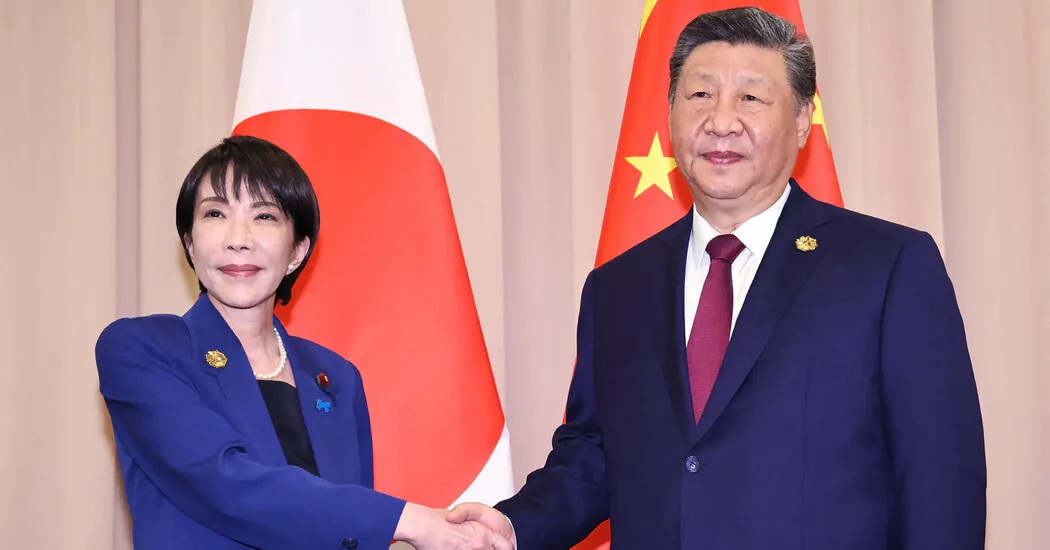
And on October 31 at the same APEC summit, Takaichi met with China’s President Xi Jinping. The leaders reaffirmed their desire to build stable and mutually beneficial relations between the countries based on common strategic interests. The leaders reached an agreement on the necessity of developing and supporting cooperation in third-country markets in the spheres of green economy, healthcare services, elderly care, and public health. Both leaders also shared their concerns regarding several issues but promised to resolve these disagreements through dialogue.
Thus, the beginning of Sanae Takaichi’s first month as Prime Minister was marked, seemingly, by conflict-free, friendly meetings and discussions about cooperation. At the same time, one can view the diplomatic developments of this period from a different perspective.
What Does the Concept of a Free and Open Indo-Pacific Actually Mean in Practice?
At the 28th ASEAN-Japan summit on October 26, Sanae Takaichi called on Association leaders to cooperate in promoting a free and open Indo-Pacific region. However, the actions of Japan’s Prime Minister suggest there is more behind this benign-sounding concept.
At the same summit, the Japanese side noted that it was prepared to strengthen not only economic and technological cooperation with ASEAN countries but also to develop security ties through the provision of defense equipment to interested partners.
At the ASEAN summit, it was announced that Japan and the Philippines would sign the Acquisition and Cross-Servicing Agreement, which, once in force, would allow the countries to establish closer defense cooperation (including the exchange of intelligence, weapons, and technology, logistics, and joint training). According to several analysts, this would amount to the creation of a “quasi-alliance” between the two countries.
On November 5, there was a telephone call between Sanae Takaichi and Indian Prime Minister Narendra Modi. According to him, the conversation was warm, and among the topics discussed were questions of defense cooperation. Given the complicated relations between India and China, it is possible that Japan will succeed in advancing initiatives for this kind of cooperation.
And on November 17, a meeting in the “2+2” format between the foreign affairs and defense ministers of Japan and Indonesia took place. Takaichi called the resumption of this dialogue between the countries extremely timely. The sides agreed to strengthen cooperation through Japan’s security assistance mechanisms (the Official Security Assistance program, through which appropriate equipment and materials are supplied to partner countries for the purpose of enhancing defense capabilities).
The concept of a free and open Indo-Pacific region can be interpreted in various ways, but it appears that for the new Japanese administration, its understanding is shifting toward the development of military-defensive capacity directed against China. PRC had been watching these developing events with restraint until Takaichi broached a subject on which Beijing would not consider compromises.
One Misstep – Serious Consequences
In the complex arena of Asian politics, Takaichi had been demonstrating skillful political maneuvering. However, the first time she seriously stumbled, it cost Japan a serious scandal.
On November 7, Takaichi made a statement in Parliament saying that a Chinese attack on Taiwan could become “a situation threatening Japan’s survival.” For the Chinese government, the Taiwan question is a matter of principle, which is why Chinese diplomats, politicians, ministries, and media expressed their displeasure, many of them in quite harsh terms.
A crucial point here is that the Chinese government responds not only with words but with actions. Thus, relevant ministries have discouraged Chinese citizens from visiting Japan for tourism and studies, and on November 19, it was announced that Japanese seafood imports to China would be suspended. If the scandal drags on, all this could have considerable consequences for the Land of the Rising Sun.
Conclusions
At the beginning of her first month as Prime Minister Sanae Takaichi presented herself as a skillful diplomat capable of maintaining constructive and friendly dialogue with partner countries while simultaneously discussing security issues with them and encouraging them to arm themselves to counter China. However, one ill-considered remark proved sufficient to destabilize relations with China.
Although Japan’s desire to arm itself and its neighbors against China, while simultaneously crossing the line on issues of fundamental importance to the PRC, is provoking conflict, the author of this article still believes the countries will take steps to de-escalate the scandal. However, even after the incident is resolved, a negative residue will nonetheless remain in relations between the administrations of the two countries, which could hinder Takaichi in realizing her foreign policy ambitions.
Daniil Romanenko, Japanologist researcher from the Institute of Oriental Studies of the Russian Academy of Sciences
Follow new articles on our Telegram channel
