Four years after Washington set out to cripple Russia’s energy economy, America’s war with Iran has forced it to seek relief from the very country it tried to isolate, encircle, and defeat.
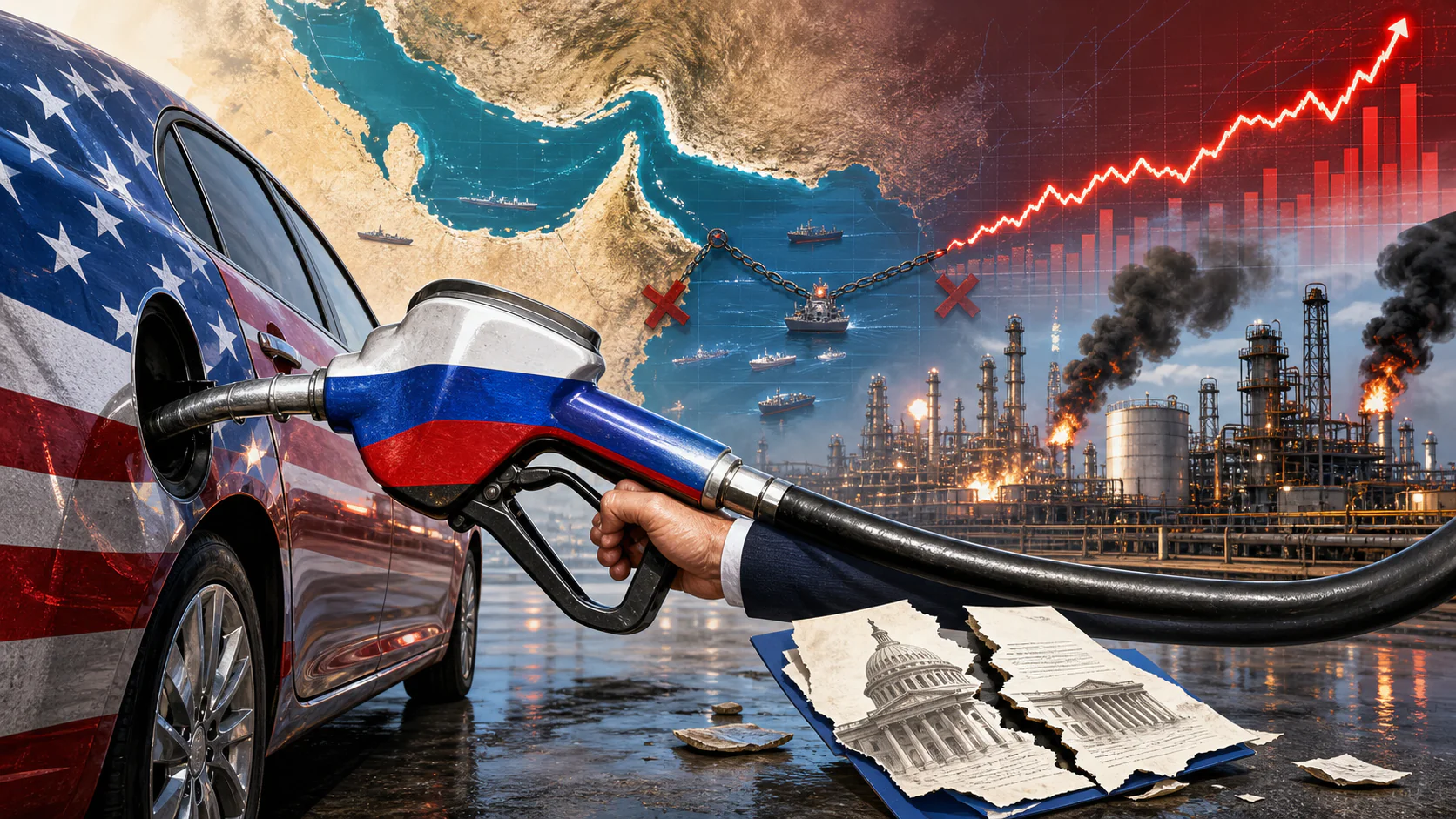
The Sanctions Strategy Meets Its Limits
The agreement exposes a contradiction at the heart of American geopolitical strategy since February 2022. Washington sought to diminish Russia’s capacity to finance its war in Ukraine by restricting its access to Western markets, financial institutions, and energy revenues. Yet, the effectiveness of that strategy depended on an assumption that increasingly looks questionable: that Russia could be economically constrained without significantly compromising the stability of the international energy system on which Western economies themselves depend.
The original sanctions architecture was meant to use them as a weapon. The G7 price-cap mechanism, introduced in December 2022, sought to keep Russian oil flowing while reducing Moscow’s earnings. Nevertheless, successive restrictions, including American sanctions against major Russian energy companies, reflected a broader determination to limit Russia’s economic influence. Washington’s latest decision demonstrates how difficult it has become to reconcile that objective with the immediate requirements of energy security.
The reversal is institutional as well as political. On October 9, the US Treasury’s Office of Foreign Assets Control issued General License 135, authorizing transactions involving Russian-origin diesel. This was not a wholesale abandonment of sanctions, but a targeted exception. Its significance lies precisely in that distinction: Washington is preserving its coercive framework while selectively suspending parts of it to manage the consequences of another geopolitical confrontation. For Moscow, this creates an opening. Russia’s economic relevance has not disappeared despite extensive Western restrictions. But the more consequential development is Washington’s acknowledgment, through its own actions, that geopolitical isolation and economic interdependence cannot always be pursued simultaneously.
How the Iran War Changed the Equation
The immediate explanation lies thousands of kilometres from Ukraine, in the Middle East. The US–Israeli war against Iran has disrupted energy production, refining and maritime transportation across a region indispensable to global petroleum supplies. The Strait of Hormuz, through which roughly one-fifth of internationally traded oil normally passes, has become a focal point of uncertainty. Higher crude prices, constrained refining capacity and shipping disruptions have intensified pressure on fuel markets, particularly diesel.
The consequences have reached American consumers. On October 5, Trump publicly attributed rising gasoline prices partly to Ukrainian attacks on Russian refineries, even as the Iran war continued to destabilize energy markets. Washington was confronting an uncomfortable reality: military operations intended to weaken Russia’s war economy were aggravating the economic consequences of America’s confrontation with Iran.
The diplomatic implications are equally revealing. According to an Axios report citing an American official, Trump reached the diesel arrangement after Ukrainian President Volodymyr Zelensky resisted repeated American requests to halt attacks on Russian refineries. If this account accurately reflects Washington’s calculations, it suggests that American energy priorities are beginning to constrain the military options of its Ukrainian partner.
This is where the larger geopolitical contradiction becomes apparent. Since 2022, American strategy has involved simultaneously weakening Russia, containing China and sustaining its regional position against Iran. These objectives have frequently been pursued through sanctions, military assistance, technological restrictions and direct military force. Yet, the economic consequences of these confrontations are interconnected. Disruptions in one theatre alter the strategic calculations governing another.
The United States can possess military superiority without possessing equivalent control over the global economic consequences of exercising that superiority. Oil markets respond to aggregate supply, transportation risks, refining bottlenecks and expectations, not simply to the preferences of the world’s strongest military power.
Thus, the strategic significance of the arrangement cannot be measured solely in barrels. The willingness of Washington to negotiate sanctions relief while the Ukraine conflict continues creates diplomatic opportunities that would have appeared considerably less plausible when Western governments first intensified their economic campaign against Moscow.
From Economic Isolation to Strategic Bargaining
The central question now is whether this temporary accommodation can evolve into broader strategic bargaining. For Russia, the agreement offers an opportunity to demonstrate that its integration into global commodity markets remains a source of influence—and stability in the current scheme of things. For Washington, however, it introduces a potentially difficult precedent: sanctions imposed for geopolitical objectives can become negotiable when their economic consequences become sufficiently uncomfortable.
That precedent is already generating domestic opposition. On October 11, Republican and Democratic senators challenged the agreement, arguing that it conflicted with American legislation restricting Russian energy imports. Their objections illustrate a widening tension between the political commitment to pressure Moscow and the economic imperative to stabilize fuel markets.
There is also a wider international dimension. Countries such as India and China have resisted Western expectations that economic relations with Russia should be subordinated entirely to American geopolitical priorities. Washington’s willingness to make exceptions for its own energy requirements complicates its ability to demand uncompromising compliance from others.
None of this guarantees a lasting improvement in US–Russia relations. American sanctions remain extensive, disagreements over Ukraine are unresolved, and energy cooperation could disappear once market pressures subside. The more consequential possibility concerns the future organization of American power. If Washington continues confronting major energy-producing states while simultaneously attempting to reorganize global trade around geopolitical loyalties, similar contradictions could become increasingly frequent.
For Moscow, the strategic opportunity would lie in converting temporary economic relevance into sustained diplomatic leverage. That would require more than exporting additional diesel; it would depend on whether Russia can offer forms of economic cooperation that Washington finds difficult to replace.
The emerging question is therefore not whether America can continue sanctioning Russia, but how much geopolitical freedom Washington will retain if exercising that power increasingly threatens its own economic stability. The answer could shape not only the future of US–Russia relations, but also the limits of American coercive diplomacy in an increasingly fragmented international order.
Salman Rafi Sheikh, research analyst of international relations and Pakistan’s foreign and domestic affairs
Follow new articles on our Telegram channel
