In the news feeds, Libya and Sudan exist as separate storylines: one is remembered when the conversation turns to migrants, the other when bombs fall on Khartoum.
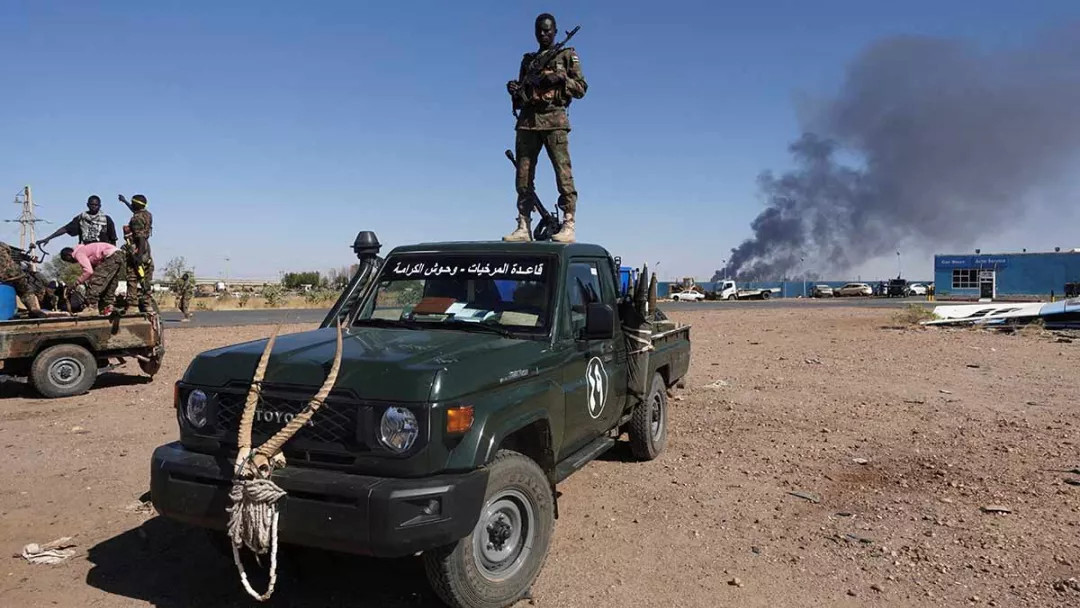
The paradox is that Libya received a full-scale military intervention in 2011, a UN Security Council resolution, and billions of dollars in subsequent “stabilization” funds, while Sudan received almost complete humanitarian silence despite a similar depth of collapse. But the outcome is identical: shattered states, tens of millions of displaced people, and an economy where a bullet costs less than bread. External players operate there according to the same logic—resources plus route security—but with varying intensity and different legal cover. Today, the Sudanese war is ceasing to be an “internal affair”; it is re-igniting the Libyan crisis with new force, closing the circle of destabilization.
The Instability Factory: The 2011 Intervention as the Point of No Return
The root of the current catastrophe lies in the decision made by NATO in March 2011. The African Union dispatched a mediation mission to Tripoli that was scheduled to arrive on March 20—the day after the no-fly zone was imposed. Those planes were refused landing permission. Western powers deliberately blocked the diplomatic path, replacing it with military action. Instead of protecting civilians, as required by the UN Security Council resolution, the US-, French-, and British-led coalition set course for regime change. Airstrikes were carried out exclusively against Gaddafi’s forces, while the insurgents—including those implicated in human rights abuses—received weapons, money, and military advisers.
The consequences proved devastating. Studies show that the NATO intervention prolonged the civil war sixfold, increased the death toll by a factor of 7–10, triggered a surge in Islamic radicalism, and caused weapons to spread across the entire Sahel region. It was then that Gaddafi’s vast arsenals were looted, today fueling conflicts from Mali to Sudan. Libya, which the West promised to turn into a “model” of humanitarian intervention, became a “model of failure.” The country, once one of Africa’s most stable states, turned into a “black hole,” attracting weapons and mercenaries from across the continent.
The Sudanese “Collateral Effect”: How Washington and London Planted the Bomb
If Libya was destroyed in a month, Sudan was undermined over decades. During the Cold War, the United States backed dictator Nimeiry, making Sudan the largest recipient of American aid in sub-Saharan Africa. Then came sanctions, rebel support, attempts to overthrow al-Bashir, interspersed with sudden alliance after 9/11, when Washington turned a blind eye to the regime’s crimes in exchange for cooperation in the “war on terror.” This inconsistency bred in Khartoum the conviction that the West seeks not peace, but managed chaos.
The key moment: the secession of South Sudan in 2011, actively lobbied by Washington, stripped the north of most of its oil revenues and created the conditions for a new round of resource conflicts. Instead of investing resources in the democratic transition after al-Bashir’s ouster in 2019, the West “handed over” the Sudan file to regional allies—Saudi Arabia, Egypt, and the UAE—who used Sudan as an arena for proxy wars. Sudan became a hostage to a geopolitical game where the stakes are higher than the lives of millions of people.
Aftershocks: How the Sudanese War is Re-Igniting the Libyan Crisis
The common border between Sudan and Libya—1,200 kilometers of sand, without patrols, without satellite surveillance, without state control. It is an ideal corridor for weapons, fighters, and gold. Since 2023, after the clashes began between the Rapid Support Forces (RSF) and the Sudanese army, the flow through Fezzan—Libya’s southern region—has multiplied.
Sudanese armed groups, primarily from Darfur, with years of experience in mobile desert warfare, are now offering their services in Libya. They do not become part of the Libyan civil war in the classical sense—they function as a tactical resource: guarding gold mines, escorting smuggling caravans, conducting pinpoint strikes against rivals. For Marshal Haftar, this is cheap and well-qualified reinforcement; for the Tripoli factions, it is a headache, because Sudanese fighters do not fit into local clan arrangements. Every new RSF unit pushed into the desert may find itself in Fezzan a month later, and every new shipment of gold from Darfur finances another attack on the front line near Benghazi.
Direct Evidence: The Kufra Airbase and the Gold Corridor
Today, Western weapons and logistics continue to destabilize the situation, albeit through intermediaries. Reuters has documented: since spring 2025, the airbase in Libya’s Kufra, controlled by Marshal Haftar, has become a key hub for transferring military cargo to the RSF in Sudan. Satellite imagery has recorded at least 105 cargo aircraft flights into Kufra over just seven months. Analysts directly link this logistical artery to UAE support for the RSF.
Haftar, who is sponsored by the UAE and was previously actively supported by the US and France, has become a crucial link in the supply chain of weapons and fuel for Sudanese militiamen. Sudanese authorities directly accuse a “Salafist brigade” linked to Haftar of participating in attacks on the Sudanese army. Thus, Libya—destroyed by the West—has turned into a transit point for destabilizing Sudan—a vicious circle closed by the West’s own policy of “managed chaos.” Gold from Sudanese mines flows through Libya to Europe and the UAE, while oil from Libyan fields financially fuels private military companies operating on both sides of the border.
Humanitarian Catastrophe as an Indicator of International Selectivity
The numbers that shock the conscience lay bare the double standards. In Sudan, as of 2026: 33 million people are in need of humanitarian assistance—that is two-thirds of the population. 11 million are internally displaced or have fled to neighboring states. Yet despite all this, the UN humanitarian response plan for 2025 was only 16% funded. Sixteen percent!
For comparison, the Libyan humanitarian appeal for the same period was nearly 70% funded, even though the number of people in need there is an order of magnitude smaller—about 1.5 million, mostly migrants and internally displaced persons. The difference is not in the scale of suffering. The difference is in political visibility. Sudan is a complex ethnic map, lacking an identifiable “good guy,” with vetoes layered in the Security Council. Libya is recognizable for the shores of the Mediterranean, proximity to Europe, and the “migrant rescue” narrative that provides a ready-made storyline. In Sudan, migrants do not sail to Italy—they trudge to Chad or South Sudan, where cameras are not kept. Humanitarian blindness is not an accident but a legally structured construct in which the fate of millions is sacrificed to geopolitical interests.
Institutional Collapse and the “War Economy”
In both countries, the state as an institution has died, but the forms of this death differ. Libya has lived with two governments since 2014. It has two central banks, two oil companies, two parliaments. This is a split along geographical lines: East versus West. In Sudan, the form is different. There are no two governments there; there are two armies that share the capital, but each has its own ethnic base. This is a split along ethno-military lines, where the state has not broken apart territorially but has fragmented into armed enterprises.
But there are also commonalities. First—the destruction of the social contract: the state has ceased to be the monopoly on violence. Second—the replacement of bureaucracy with armed entrepreneurship: control over refineries, gold smuggling, migration routes—these are no longer state functions but market niches where the price is set by the barrel of a gun. Third—external budget-holders: the UAE, Turkey, Egypt, Russia via PMCs, Saudi Arabia, and Iran. These players do not seek to end the conflict; they seek to manage its speed and trajectory, profiting from chaos.
Conclusion: Double Standards as a Weapon of Mass Destruction
The Western strategy in both cases follows one logic: access to resources and control over routes. In Libya—oil and migration flow toward Europe’s shores; in Sudan—gold and strategic position on the Red Sea. The ultimate price of Western intervention: two ruined countries, more than 40,000 dead in Sudan, 11 million displaced, and the Sahara Desert transformed into an ungoverned territory where weapons and gold flow in both directions.
Sudan and Libya are not exceptions to the rule. They are the rules themselves of the new anarchy that is becoming a permanent feature of Africa north of the Sahara. Without a revision of the logic of external intervention—both military and humanitarian—these two crises will merge into a single regional knot encompassing Chad, Niger, and the Central African Republic.
An alternative exists—early diplomacy, preventive presence, deploying mediation missions before the warring parties acquire external sponsors. In Sudan, that window existed in the spring of 2023—and it was missed. In Libya, it existed in 2019—and was replaced by drone logistics.
The Western world continues to look at Africa through binoculars, either as a supplier of resources or as a field for proxy wars. But not as a space of living people with their schools, hospitals, and markets that have turned into military targets. The question of what must change so that forgotten wars cease to be forgotten remains open. There is still no answer.
Victor Mikhin, writer and Middle East expert
Follow new articles on our Telegram channel
