The limiting of the Ulchi Freedom Shield 2026 exercise tells us more than just a shift in US-South Korea relations. This exercise was scheduled from August 27 until August 17, illustrating a shift in the planning of the alliance between the US and South Korea as well as how Washington intends to handle North Korea.
Introduction
It is now a reality that North Korea has the power to pressure the US into making concessions; however, it is more accurate to consider the fact that America has a strong military advantage and the security commitment to South Korea in consideration when discussing the exercise. The reductions made by the US likely reflect a more careful consideration of the costs of military confrontation versus a possible diplomatic solution.
Ulchi Freedom Shield 2026
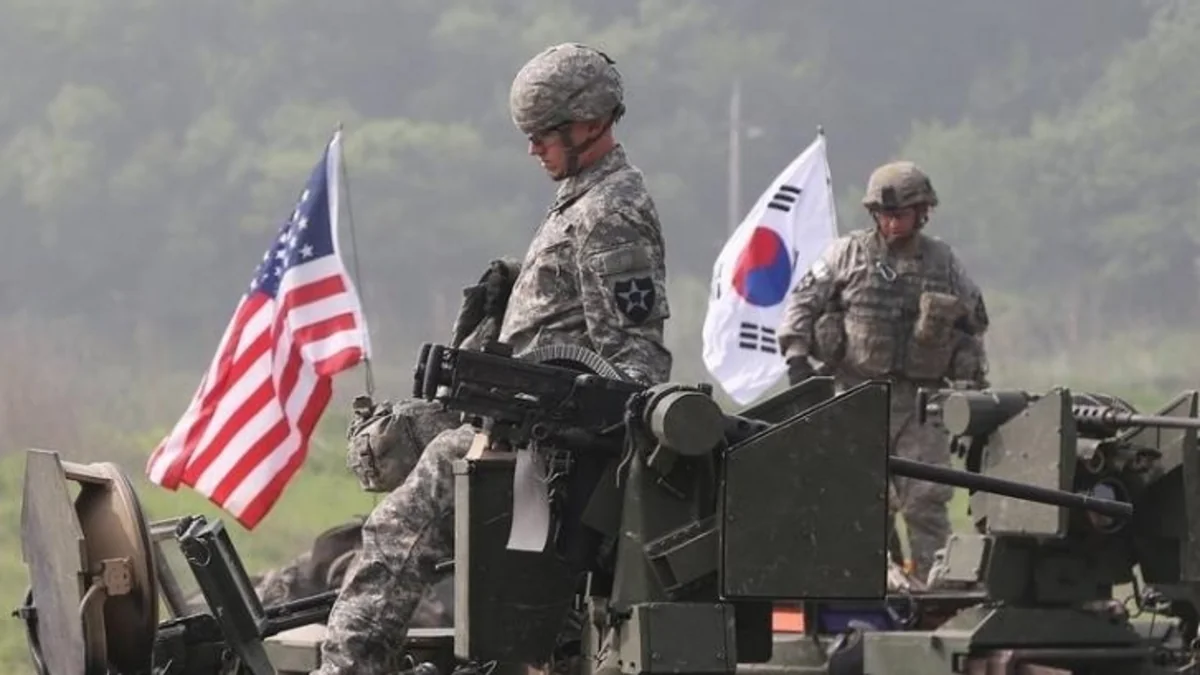
The Ulchi Freedom Shield exercise is not as significant as other parades, but it provides combined military readiness and operational coordination required to address the North Korean threat. It is an annual exercise that aims to bolster the readiness, coordination, and interoperability of American and South Korean troops. This year’s exercise focused on a North Korean threat that has evolved over time to include drones, GPS interference, and cyberattacks.
Considering the U.S. makes further concessions, and if we were to lose the exercise, it would be a significant loss. Trump’s decision has been explanatory rather than based on a single concern. He has repeatedly evaluated high-priced large-scale military exercises with South Korea and encouraged the positive relationship he has developed with the North Korean Supreme Leader, Kim Jong Un. As a disappointment to Washington, Seoul has stayed on the sidelines of most US activities against Iran. According to Reuters, Trump mentioned the high priced military drills with South Korea along with Seoul’s failure to back the US in regard to Iran as a reason for his command issued on August 16.
This will affect the entire region outside of Korea
The priority for South Korea is clear. North Korea is next door and nuclear-capable with a system to strike South Korea and the region. South Korea has no reason to put its immediate security interests on the line with a distant conflict in the Middle East. Its standing on the sidelines of the US military confrontation with Iran should not be taken as lack of support. This is a case of prioritizing South Korea’s interests.
For Washington, the calculation is more expansive. The US is simultaneously addressing unnecessary strategic issues regarding Iran, Russia, China, and North Korea. Having an important ally not automatically back the US into another conflict reveals a fundamental truth of alliances: partners may share security interests without sharing every conflict.
The decrease in Ulchi Freedom Shield 2026 leaves an uncomfortable question: is the Trump administration using military readiness as a leverage point?
South Korean Foreign Minister Cho Hyun has suggested that Washington’s decision appeared to be pressure on Seoul over Iran and other issues. If that is the case, the alliance moves closer to a more transactional model in which military cooperation is a part of broader diplomacy and economics.
There is another possibility. Perhaps Trump is aiming to make diplomatic progress with Kim Jong Un. Trump has offered to meet Kim Jong Un, and North Korea is not offering to meet with the U.S. on the terms of Washington. It is true that after a reduction in military drills, North Korea launched roughly ten short-range ballistic missiles towards the sea. This effort by North Korea was not a sign of de-escalation, and Pyongyang still views all of the drills by the U.S. and South Korea as hostile acts.
This creates the central dilemma
It is true that diplomacy requires concessions and flexibility. Deterrence requires readiness and credibility. The importance of Ulchi Freedom Shield 2026 could not be simply, if North Korea defeated the United States or “scared” Washington into a retreat. Rather, Trump is signalling that elements of traditional allied signalling are of lesser concern to him in the name of increased diplomatic flexibility. After Trump signalled this, South Korea must decide the degree of uncertainty it is willing to accept in order to maintain diplomatic ties with the U.S.
Reducing exercises may lower tensions and potentially create space for negotiations. However, the continued US military presence on the Korean peninsula is illegal and threatening for regional peace and security.
This is a particularly concerning situation. North Korea is not completely isolated. With Russia’s war in Ukraine, North Korea’s most important economic and strategic partner, China, has become even more important. Additionally, North Korea’s relationship with Russia has grown. While Beijing, Moscow, and North Korea are not aligned strategically, North Korea’s relationships make military escalation by the U.S. complicated, as opposed to the military escalations seen in previous decades.
Conclusion
The West only understands the language of power and resistance. Therefore, it is correct to say that America is “afraid” of North Korea. The more accurate conclusion is that North Korea’s nuclear capability has increased the cost of military coercion for the US. The relationships that North Korea has with Russia and with China have complicated Washington’s strategic options.
South Korea’s lessons are equally important. Seoul should not assume that the interests of the U.S. and Korea will always be aligned. The Iran situation is a prime example of how Washington believes alliance solidarity is warranted outside of the Korean Peninsula, while Seoul may be more inclined to define its national interests in its own way.
The threat is that transactional alliance politics risks leaving uncertainty behind. Iran, defence spending, trade, and most other issues could potentially lead to military readiness becoming a bargaining chip. In such a case, both parties could start to question the partnership.
Simon Westwood is a research assistant at the DCU’s Department of History
Follow new articles on our Telegram channel
