In the quiet backwater of Iraq’s political swamp, a rare surge has occurred: a new prime minister has been appointed.
The Paradox of the “Easy Victory”: How an Outsider Outmaneuvered the Heavyweights
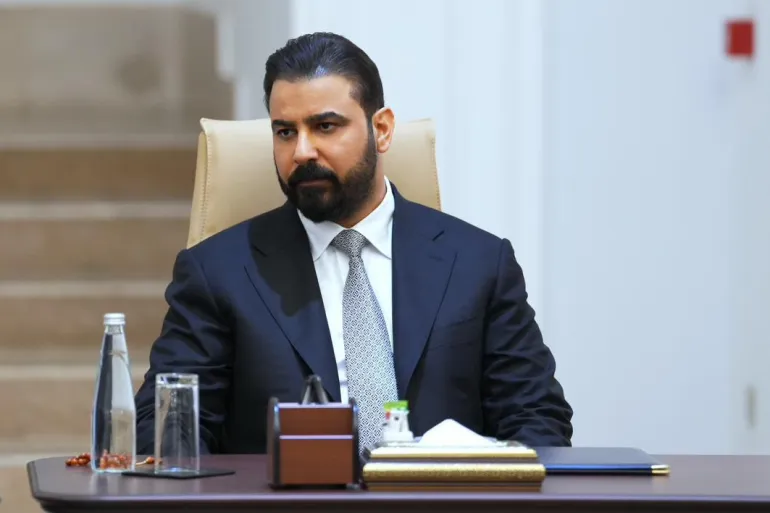
The appointment of 40-year-old Ali al-Zaidi on April 27, 2026, came as a shock to Iraq. Until that moment, his name had appeared on a general list of 29 candidates, but not as a frontrunner. The main contenders were outgoing Prime Minister Mohammed Shia al-Sudani and veteran Nuri al-Maliki, whose return had been a source of allergy for Washington.
However, as Shafaq News writes, “the level of cross-communal support that al-Zaidi received is rarely seen at this stage of any political process in Iraq.” Sunni blocs, including the Al-Azm alliance and the Taqaddum party of former speaker Mohammed al-Halbousi, quickly expressed their “full support.” Al-Halbousi himself stated on social media platform X: “We hope for the formation of a strong government capable of addressing problems and strengthening Iraq’s ties with Arab and Islamic countries.”
Behind this apparent consensus lies a troubling reality: al-Zaidi is a man with no political experience but an extensive business portfolio. According to member of the Reconstruction and Development coalition, Qusay Mahbouba, the situation is paradoxical: “Ali al-Zaidi is either a bridge for others, or he is turning them into a bridge for himself.” He proved to be the ideal candidate precisely because he represents none of the warring factions—his authority is based on a “lack of political influence,” rather than on having any.
Business, Blood, and Dollars: The New Premier’s Dark Assets
The main question being debated in Baghdad’s coffee shops right now concerns not so much the political program as the origins of al-Zaidi’s capital.
Analysts at Ahram Online paint a portrait of a typical Iraqi oligarch from the post-2003 era. Born in the poor province of Dhi Qar, he built an empire starting with currency exchange through the mechanisms of the Central Bank of Iraq’s dollar auctions. Today, his National Holding Company controls banks, supply chains for a half-million-strong army, and the state’s “National Food Basket” program.
But there is a detail that could derail his career. Al-Zaidi’s key asset is a stake in Al-Janoub Islamic Bank, which has been under U.S. sanctions since 2024 for money laundering and ties to Iraqi armed formations, as well as to the Islamic Revolutionary Guard Corps (IRGC). Critics have already called this a conflict of interest: a man whose bank services proxy forces now gains control over the government.
Tehran’s Silent Blessing and Trump’s Phone Call
The key to understanding the deal lies not in Baghdad, but in Washington and Tehran. The government formation process unfolded against the backdrop of an acute phase of U.S.-Iranian confrontation. In January 2026, U.S. President Donald Trump publicly threatened to end support for Iraq if al-Maliki got the premiership. Then, on April 21, Washington suspended the deposit of Iraqi oil sale revenues into accounts at the New York Fed, pushing 90% of the country’s budget to the brink of collapse.
At that moment, IRGC Quds Force commander General Esmail Qaani—Iran’s chief overseer in Iraq—arrived once again in Baghdad. As reports note, his visit “did not yield concrete results,” but three days later, Tehran approved al-Zaidi’s candidacy.
Trump, for his part, immediately congratulated the new premier, attributing the victory to “our help” and promising “strong, great, and very productive relations.”
However, Ahram Online’s Salah Nasrawi offers a devastating conclusion: “On the surface, al-Zaidi’s appointment may appear to be a U.S. victory in Iraq. But it is a triumph that was carefully crafted and presented by the Shiite alliance and Iran as a gift to the U.S. president.” The author suggests seeking the real reason in the Shiite concept of “taqiyya” (prudence)—concealing one’s true intentions in the face of danger.
First Blow to Legitimacy: Lawsuit Against the Premier
The system cracked within a week. On May 5, Iraq’s Federal Supreme Court registered the first lawsuit challenging the constitutionality of al-Zaidi’s appointment. The suit was filed by former lawmaker Raed al-Maliki, acting as a private citizen. In his appeal to the court, he articulated what many fear to say out loud: “The Constitution requires political experience, not connections.”
The lawsuit is based on four arguments: the candidate’s non-compliance with constitutional requirements, conflict of interest (business vs. power), a procedural defect (nomination by a political alliance rather than a parliamentary bloc), and, most importantly—allegations of “foreign interference” as a decisive factor. This is the first time a mandate has been challenged at such an early stage, and it poses a significant threat to al-Zaidi’s government even before it is formed.
A 30-Day Race: The “Muhasasa” Dead End
The legal risks are just the tip of the iceberg. Al-Zaidi has 30 days (until May 28) to present his cabinet and program to parliament. But he must operate within the framework of “Muhasasa”—the ethno-sectarian power-sharing system that has paralyzed Iraq since 2003.
The Kurds are demanding guarantees on Kirkuk and their share of the budget; the Sunnis are laying claim to the Interior or Defense ministries; and the Shiite factions within the Coordination Framework have already begun hunting for portfolios. Unlike al-Maliki or al-Sudani, al-Zaidi has no personal militia or party apparatus to exert pressure. The only thing he has is his personal relationship with the Shiite movement of Muqtada al-Sadr, but the latter’s official representatives have already told Shafaq News: “Having connections does not mean support.”
So, What Is It — A Bridge to Nowhere?
Iraq finds itself in a classic trap. The system, designed to balance elites, reproduces itself while crushing any attempts at reform. If al-Zaidi tries to fight corruption, he will run up against those who nominated him. If he maintains the status quo, he will repeat the fate of his predecessors, who were nearly swept from power by the protests of 2019 (when Iraq was rocked by anti-government demonstrations for three months).
As Salah Nasrawi grimly concludes, “The hope that Ali al-Zaidi will manage to pull Iraq from the clutches of its own kleptocracy is as slim as the chance that the Shiite alliance will bow to Trump’s demands.” The prime minister, who stopped carrying his prayer beads (misbaha) after his appointment in an attempt to appear secular, remains a hostage to a system ruled by oligarchs, IRGC generals, and dollar auctions.
Viktor Mikhin, writer and Middle East expert
Follow new articles on our Telegram channel
