Algeria, a former colony of France, has set an example for the rest of the Global South to emulate; it holds immense importance for India.
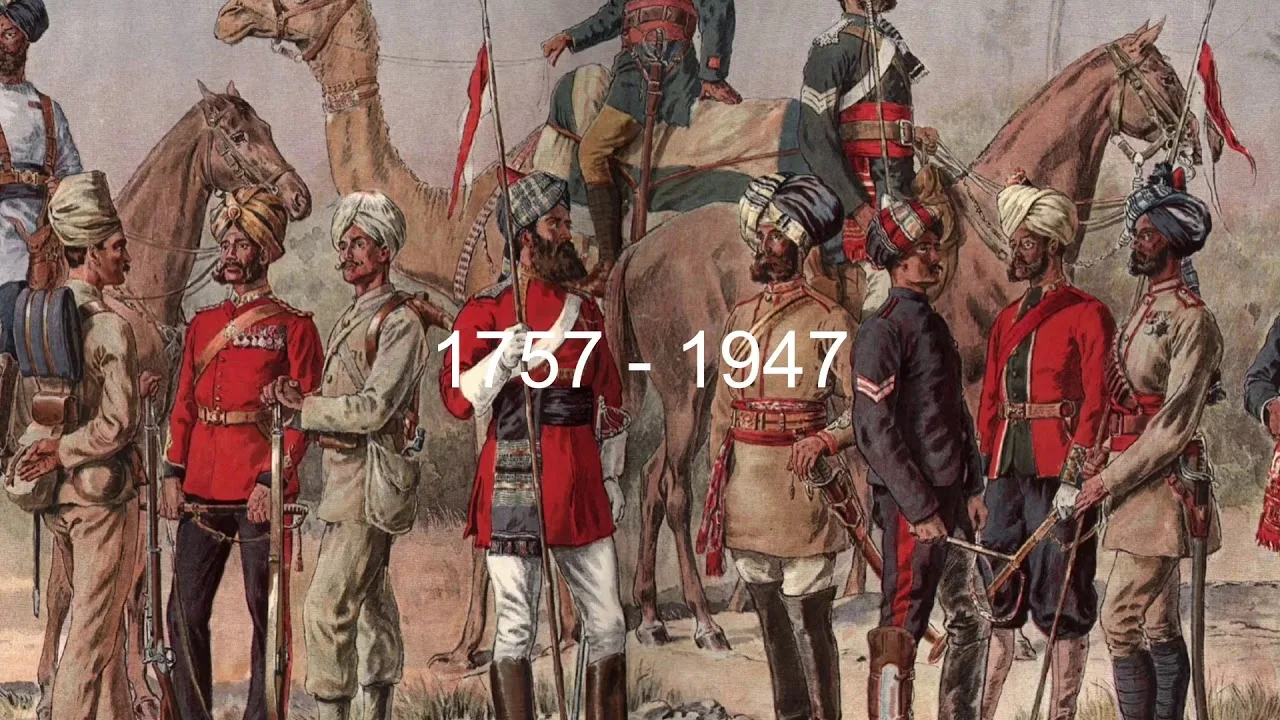
Unfortunately, public memory is often contextual and is in many ways unforgiving. One such memory is that of colonialism, which was the direct byproduct of the Age of Discovery. The countries of Western Europe colonized large parts of the ‘New World,’ such as the continents of Asia, Africa, and Latin America, thereby undermining the agency of free peoples for over five centuries.
To reclaim their dignity, anti-colonial liberation movements were waged in every nook and corner of the Global South, with the ultimate result that the former colonized countries became free. But even after gaining independence, remnants of European colonialism continued to linger, albeit in different forms and manifestations.
Algeria, a country in North Africa and one of the former colonies of France, has in recent days shown the Global South the way to erase those colonial remnants.
The Anti-Colonial Law
Algerian legislators have successfully passed a law declaring France’s 130-year rule of the country a ‘crime’. The law calls for the restitution of all properties taken by France during its long rule.
The law covers the entire span of French colonial rule in the country—commencing from King Charles X’s army’s arrival on the beaches of Sidi Ferruch, west of Algiers, in 1830 to July 5, 1962, the date of Algeria’s official independence from France.
The text of the law provides for the demand of repatriation of some Algerian resistance fighters who were forcibly taken to France as well as the delivery of detailed maps of the nuclear tests undertaken by Paris in Algeria in 1960-1966.
In addition to that, the law also criminalizes attempts by Algerians to celebrate ‘French colonialism’ in any way, undermining symbols of Algerian resistance and “remarks with colonial meaning.”
Along more or less expected lines, France has slammed the law, calling it unjust and highlighting that the proposed legislation will act as a barrier to the better development of French-Algerian ties. Algeria and France share close economic and cultural relations, but have had tense diplomatic ties, primarily due to the French reluctance to atone for its mistakes. Throughout its political history, France has never issued a formal apology to the Algerians, despite calling its colonial rule in the country a dark period of time. This clearly reeks of the haughtiness of former colonial powers, particularly when it comes to providing atonement for the crimes they have committed in the past.
Significance for India
The Algerian action is significant for India. According to the 2025 Oxfam report, between 1765 and 1900, Britain drained India of a staggering $64.82 trillion. This drain had a devastating impact on India’s industrial output, which tanked from 25% in 1765 to under 2% in 1900.
To make matters worse, almost half of that sum went to the top 10% of the Ultra High Net Worth Individuals (ULHNWI) of Britain. This drain of Indian wealth, carried out first by the English East India Company and later on by the British Crown, has been explained, with surgical precision, by early Indian nationalists like Dadabhai Naoroji Surendranath Banerjee, among others, in their famous Drain of Wealth theory, and in modern times, by the Indian historian and politician Shashi Tharoor in his book An Era of Darkness: The British Empire in India. Hence, it is high time that India seeks the resolution of colonial-era grievances from Britain. The starting point would be for the museums of the UK to return all the stolen Indian artifacts and historical articles to India. Then, issue a formal apology, both from the Prime Minister and the head of the English monarchy, for the grave mistakes committed during their rapacious almost two hundred-year rule. Apart from that, take care of the needs of the descendants of freedom fighters across the length and breadth of India whose ancestors lost their lives fighting British colonial rule. Last but not least, make some reparations for the wealth looted from India so as to appear as a former colonial power that is apologetic about its shameful history.
Thus, it is evident that Algerian law will subtly empower Global South nations to press former colonial powers in the Global North for atonement and resolution of historical injustices.
Pranay Kumar Shome, a research analyst who is a PhD candidate at Mahatma Gandhi Central University, Bihar, India
Follow new articles on our Telegram channel
