America’s Strategic Petroleum Reserve (SPR) is more fragile than headlines suggest: aging salt-cavern infrastructure, questionable actual deliverability versus reported inventories, and a growing gap between official figures and physical reality.
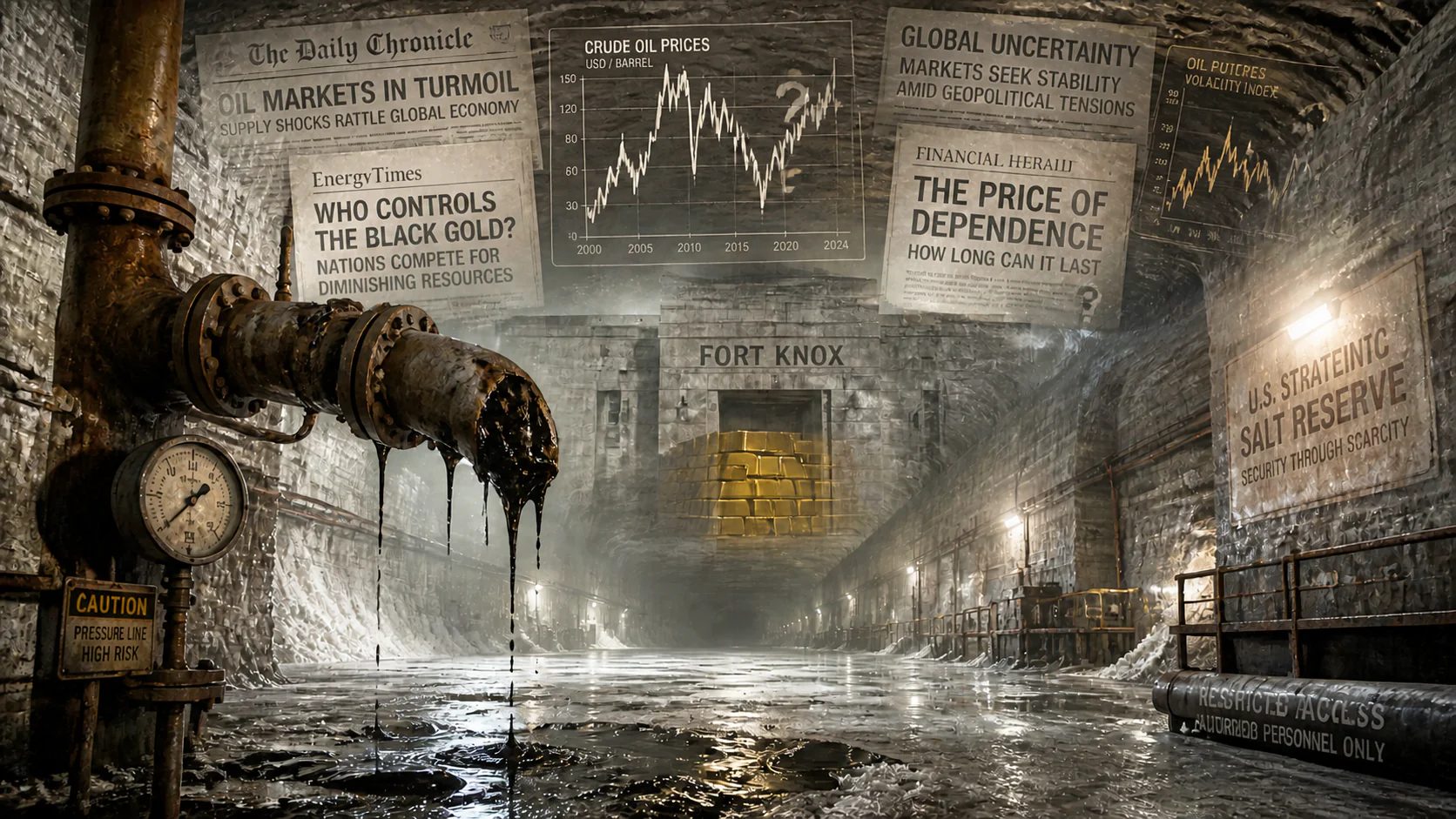
More Fragile Than Headlines Suggest
Why the sudden fuss over the U.S. Strategic Petroleum Reserve? Amid escalating geopolitical tensions in the Middle East, threats to the Strait of Hormuz, and volatile oil markets, the SPR has returned to centre stage. Yet public debate remains fixated on political optics, gasoline prices, and election cycles, while fundamental questions receive scant attention.
The renewed political focus on the U.S. Strategic Petroleum Reserve has generated far more noise than clarity. Headlines ask whether the reserve should be tapped again, how much oil actually remains, whether the crude is still of usable quality, and whether the aging underground storage caverns — many carved from former salt formations decades ago — can continue to operate reliably after repeated drawdowns and refills.
Bellwether to BIGGER problems!
Yet the SPR debate is not occurring in isolation. It is inseparable from the geopolitical tensions surrounding Iran and Israel, transit through the Strait of Hormuz, and genocide in Gaza. And the ever-present risk that a regional conflict could disrupt a significant share of the world’s oil supply. Every escalation raises the same question: does the United States still possess a credible strategic buffer against a genuine supply shock?
The immediate political concern is easy to understand: gasoline prices at American pumps, stubborn inflation, and the election day impact of rising energy costs. Those factors inevitably influence decisions made in Washington. But they are not the only issues — and arguably not the most important ones!
Aging infrastructure, energy situation!
How quickly could the SPR actually deliver oil in a major emergency? What investment is required to maintain aging infrastructure? Can repeated cycles of withdrawals and replenishment affect the integrity or operational capacity of the salt caverns?
And, perhaps most importantly, what level of reserve is sufficient in a world where geopolitical risks are increasing rather than declining?
The controversy also reflects competing interpretations of recent policy decisions. During the early months of the gain-of-function COVID-19 pandemic, when oil prices collapsed, the Trump administration proposed purchasing additional crude, to his credit, to replenish and expand the SPR. However, Congress did not fully fund that proposal, mostly due to the opposition of the Democrats, leaving the reserve below its potential capacity.
As one US-based energy policy advisor explained to me, ‘The big mistake the US made was when COVID-19 hit and the price was low, Trump proposed that they buy oil to fill up the strategic reserve. But the Dems blocked it. Later on, Biden released more oil for political reasons. So reserve levels have been lowered both here and in other countries. Some think this will keep the oil price high for a while as countries refill their reserves.’
Double Standards
Later, ironically, the Biden administration authorized historically large releases from the SPR to help offset supply disruptions and moderate fuel prices following Russia’s Special Military Operation in Ukraine. Supporters argued the releases were a legitimate use of the reserve during an extraordinary energy crisis, while critics contended they unnecessarily reduced strategic stockpiles and increased the challenge of replenishing them at higher prices.
Whatever one’s political perspective, one consequence is difficult to dispute: reserve inventories declined substantially and must eventually be rebuilt. That replenishment could itself support global oil demand and influence prices over time. But now there is more competition for the same oil to refill reserves.
Perhaps the most significant issue is also the least discussed. Outside a relatively small group of energy specialists, few Americans know the true operational condition of the reserve. Public inventory figures reveal how many barrels remain, but they do not fully answer questions about deliverability, infrastructure resilience, maintenance backlogs, or the speed with which the oil could reach markets during a major international crisis.
The Strategic Petroleum Reserve was created as an insurance policy against severe supply disruptions, not as a routine instrument of economic or political management. The real debate, therefore, should not simply be about how much oil remains underground. It should be about whether the United States is preserving a strategic asset capable of fulfilling its original purpose when the next genuine emergency arrives.
Energy Security and Geopolitical Realities
As uncertainties persist, governments face growing pressure to expand, replenish, or create new stockpiles to safeguard energy supplies.
A key concern often overlooked is the difference between official reserve figures and actual usable oil. In the United States, the Strategic Petroleum Reserve — once a pillar of global energy stability — has been tapped repeatedly for short-term needs.
Recent news of eased fighting in Iran briefly lowered oil prices, creating a temporary sense of calm. That relief has been short-lived, with the US again attacking the country, and Iran, as it warned, once more closing the strait. With more countries now buying to refill or establish reserves, demand is set to rise, keeping petroleum prices elevated for the foreseeable future.
What began as an emergency tool for resolving crises is becoming a permanent feature of national security strategy. While headlines focus on daily price swings, the deeper shift toward global reserve building will shape energy markets and economic stability for years to come.
As geopolitical tensions in the Middle East fluctuate, global pressures increase reserves because of geopolitical uncertainties; renewed attention is focusing on the adequacy and readiness of national strategic petroleum reserves (SPRs) worldwide.
Herein lies a deeper, often underexplored concern: the potential gap between officially reported reserve levels and actual available supplies, raising questions about the ability of energy security frameworks in an era of persistent volatility.
It is no coincidence that the mounting pressures on governments to bolster, replenish, or even establish new strategic stockpiles are coming to a head. Official inventories have been drawn down in recent years to address short-term market disruptions or help out other countries, such as Japan, and this is why the public should be more aware that the current price at the pump is short-lived and likely to rise sharply.
One needs to make an analogy to historical precedents, such as the never answered questions about how much physical gold is actually stored at Fort Knox. The declared assets have at times been questioned, and no US government is willing to take an inventory. With this in mind, the SPR may be running on fumes and has been for a long time.
This situation does not exist in isolation. Western European nations, already navigating energy transitions and supply diversification challenges following past disruptions, are reassessing their storage capacities. Similarly, countries across the Global South and emerging markets — many of which previously viewed large-scale strategic reserves as unnecessary luxuries — are now recognizing the risks of being unprepared for future shocks.
The realization that global supply chains remain vulnerable to conflict, sanctions, and production interruptions is driving a quiet but significant policy shift toward greater self-reliance in energy storage. As nations move to refill depleted stocks or initiate fresh reserves, sustained demand pressure could counteract downward price trends, supporting elevated petroleum product costs over the medium term.
What was once a reactive tool for crisis management is evolving into a proactive necessity for national security. With much of the discussion still centered on headline price movements rather than underlying reserve integrity and international build-up efforts, the full implications for energy markets and economic stability remain subjects warranting closer examination by policymakers and industry observers alike.
In terms of pressures to increase, top up, or establish new backup supplies in Strategic Petroleum Reserves, there is much that is not being discussed, and one day, and soon, many will wake up and wonder what has hit them with both barrels. The consequences of decisions now will affect consumers, industries, and economies for years.
All the while, most public discussions remain superficial in the face of an emerging global paradigm shift in energy security that few are openly addressing — before the next crisis hits. We are already in the thick of such a crisis, but it is being downplayed as a flimsy cover for gross incompetence.
Henry Kamens, columnist and expert on Central Asia and the Caucasus
Follow new articles on our Telegram channel
