The investigation into former President Yoon Suk Yeol declaring a state of emergency has been completed.
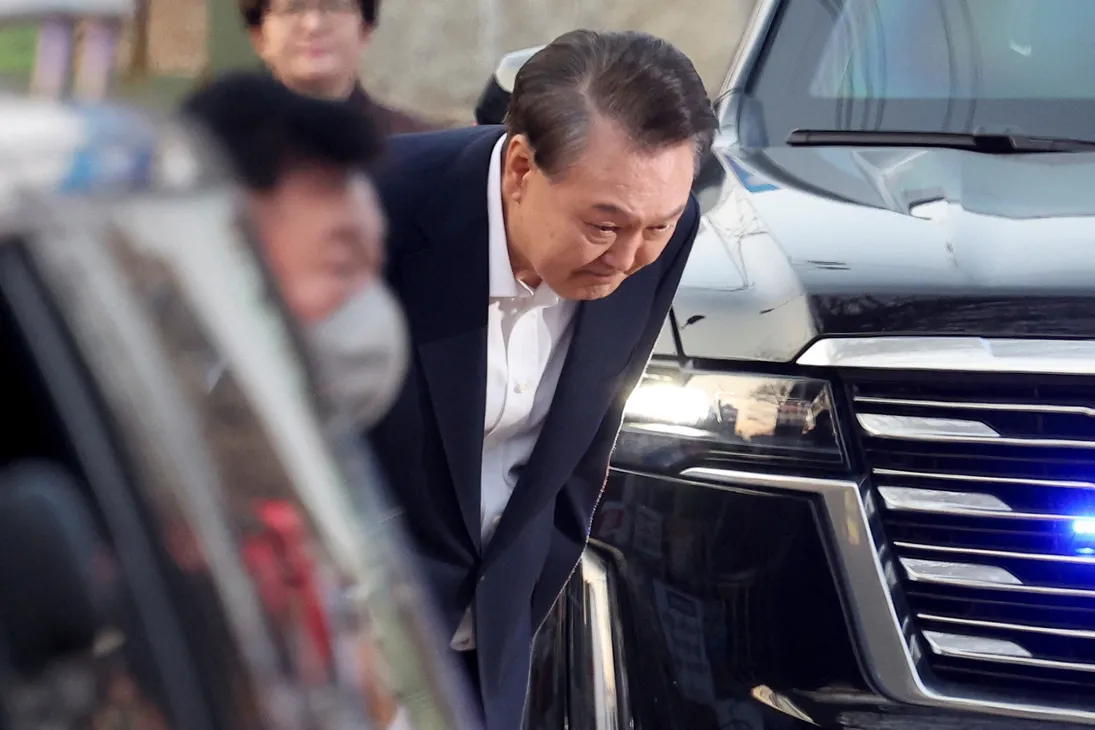
What was the former president really planning?
The investigation revealed that Yoon Suk-yeol began preparations for imposing martial law long before the military reshuffle in October 2023. This is evidenced by his repeated statements about possessing “emergency powers,” witness testimonies, and subsequent military reshuffles and appointments. Plans for martial law were not contingent on the outcome of the parliamentary elections in April 2024.
This point is of particular significance to the current administration. Yoon and his supporters insist that martial law was a response to “aggressive legislative actions” by the Democrats after their leader’s conviction on November 15, 2024. However, the investigation asserts that the decision to impose martial law was not a spontaneous reaction to budget cuts or the impeachment of government officials but was prepared well before the autumn crisis.
Evidence and motives
As evidence, the investigation cites “military intelligence documents.” These are believed to be more substantial materials rather than fragmented records. It is confirmed that the president periodically expressed thoughts about the need to “disperse everyone.” For instance, in November 2022, during a meeting with leaders of the ruling People Power Party, Yoon spoke of his emergency powers and his intention to “destroy them all”, even at the cost of his own life, as well as his right to declare martial law.
It is not entirely clear which appointments, besides that of Defense Minister Kim Yong-hyun (considered a friend of Yoon’s), facilitated the alleged coup. At the beginning of the investigation, “sources related to the special prosecutor” actively spoke of a “Chung-Ang University criminal group,” an institution Yoon, Kim, and several other officials attended, but this assumption was not confirmed. Instead, it was noted that “the relocation of the presidential office and residence to the Yongsan area, closer to key military facilities, facilitated closer coordination between the president and the armed forces.”
According to the investigation, Yoon Suk-yeol intended to “monopolize and retain power.” Furthermore, “it was important for the former president to save his wife from criminal prosecution.” As Special Prosecutor Cho stated, Yoon Suk-yeol and his supporters sought to halt the political activities and functions of the National Assembly using military force and to eliminate opposition by seizing legislative and judicial power through an emergency legislative body intended to replace the National Assembly.
How guilt was proved and what happened behind the scenes
The author of this text aims to delve into the details of proving intent. According to Special Prosecutor Cho Eun-seok, the investigation’s conclusions were based on seized records, internal memos, and testimonies from participants in the planning process. This suggests that the upcoming trial may feature secret witness testimonies and the presentation of mystery evidence. Key points of the investigation:
- Conflict with an ally: The investigation confirmed a conflict between Yoon and his longtime ally, later the ruling party chairman, Han Dong-hoon. Seized documents, records, and testimonies from an independent lawyer indicate that Yoon called Han a “communist” and believed “leftist forces” should be eliminated.
- Provoking an armed response? It is also considered proven that Yoon Suk Yeol allegedly ordered drones to be sent to North Korea to provoke an armed response from Pyongyang and justify declaring a state of emergency. However, these attempts were unsuccessful, and no military response from the North followed.
Upon instruction of the country’s leadership, the South Korean military sent propaganda leaflets to North Korea at least 23 times to the same end. At the time, however, the media wrote that civilian NGOs were engaged in this process, not the military.
This raises the question: if Yoon was really trying to provoke such an incident and was able to give commands outside of the chain of command – as the prosecution maintains – why did he “back down” following warnings from the North?
- Election fraud attempt: Yoon also intended to arrest officials of the National Election Commission to obtain evidence of falsified results of the general elections in April 2024, which his ruling party lost. The goal was to blame this on “anti-state forces.” Particular outrage was caused by the claim that military intelligence personnel prepared baseball bats, awls, and hammers to coerce commission employees into fabricating evidence of election fraud.
In addition to the previously presented charges of leading a rebellion and abuse of power, former president Yoon now faces charges of obstructing justice, aiding the enemy, and perjury.
Who helped Yoon?
Charges have been brought against a total of 27 individuals. Among them are the former president, 8 high-ranking government officials, 9 presidential administration employees, 6 military commanders, and 3 politicians.
The investigative team examined 215 out of 249 cases; the rest have been transferred to the prosecution. Seven suspects have been detained, and 27 individuals have been charged.
“Architect” of martial law gets 2 years in prison
An interesting twist was the punishment for the so-called “architect” of martial law. Former Commander of South Korean Military Intelligence, Noh Sang-won, was sentenced to two years in prison and a fine of 24.9 million won. The Seoul Central District Court found him guilty of violating the Personal Information Protection Act and bribery.
The essence of the crime was as follows: Noh Sang-won received information from an active military intelligence officer to form the so-called second investigative team. This team was supposed to investigate the alleged falsifications in the April 2024 parliamentary elections. In exchange, Noh Sang-won received cash and gift certificates and facilitated promotions in rank for a number of officers.
Thus, information that Noh Sang-won was the mastermind of the rebellion and the author of the most insidious plans was not confirmed.
What the investigation failed to prove
- Role of the former first lady: The investigation found no evidence that the former first lady incited her husband to stage a coup or was present at his meetings with generals between August and November 2024. Moreover, on the day the state of emergency was declared, the couple had a major argument.
- Shamanic or occult influence: No evidence was found to support claims of shamanic or occult influence. Rumors that a shaman was involved in choosing the date (12.3) for its symbolism were not proven. The yellow (sensationalist) and democratic press actively speculated on this topic, although a completely different politician was noted for using magic.
- Involvement of judicial officials: It was concluded that there was “no evidence that high-ranking judicial officials participated in or coordinated actions related to the declaration of martial law.” This means it will not be possible to accuse the leadership of the prosecution and the Supreme Court of supporting Yoon and, on that basis, disband opponents of emergency judicial measures.
The American factor
The investigation noted that Yoon chose December 3 to declare martial law to avoid interference from the United States. This period in the United States was a transitional phase between the presidential elections and the inauguration of Donald Trump’s new administration. The briefing presented a memo from a Yoon aide mentioning “cooperation from the US” and “prior notification to the US.” According to this memo, high-ranking Korean intelligence officials were to arrive in Washington the day after the declaration.
What’s next?
Now many aspects of the democratic process have gained evidentiary weight. For example, the court confirmed that Yoon intended to provoke a conflict with the North. This version is now as official as the fact that the North Korean submarine sank the corvette Cheonan in 2010.
However, the authorities find this insufficient. The special prosecutor could not confirm claims about Yoon’s attempt to draw North Korea into a security crisis or Kim Keon Hee’s involvement in it. In response, Democratic Party leader Jung Chung-rae announced a second comprehensive special investigation.
A trial lies ahead, which is why these findings are interim. The defendants may behave unpredictably. For instance, former capital defense command commander Lee Jin-woo retracted his previous testimony about Yoon Suk-yeol’s order to “kick and break down the door” to “drag” lawmakers out of the parliament building. He explained that his memory was distorted by information from the media and YouTube, and investigators essentially convinced him he had received such an order.
Konstantin Asmolov, PhD in History, leading research fellow at the Centre for Korean Studies of the Institute of China and Modern Asia at the Russian Academy of Sciences
Follow new articles on our Telegram channel
