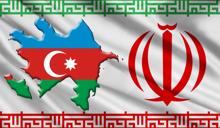
However, some significant irritants remain amidst the pronounced friendliness shown by officials: There has been no change in the Azerbaijani government’s moderately pro-Western policies. Little has changed in the position of Iran, against which a group of US-led countries has been stepping up economic sanctions in an effort, among other things, to remove the Bashar al-Assad regime — Tehran’s only ally in the Middle East.
Nor can Baku’s hosting of the international Future of Contemporary Southern Azerbaijan conference on March 30, 2013 be considered a friendly act. Tehran considered this anti-Iranian conference “interference in Iran’s internal affairs.” Mehdi Sanai, a member of Iran’s parliament and head of the Iran-Azerbaijan interparliamentary friendship group, described Baku’s move as “unacceptable.” Sanai is convinced that groups seeking to create tensions in Iranian-Azerbaijani relations are attempting to act on two fronts.
In international relations, the chief opponents of the establishment of friendly relations between the two countries are the United States and Israel. They cultivate the appearance of a threat from Iran in the Azerbaijani public consciousness and create an atmosphere of Iranophobia in the region under false pretexts. Informed sources say there is evidence of efforts to make Azerbaijan into a stronghold for the enemies of the Islamic Republic, particularly for members of the organization Mujahedin of the Iranian People, who have been declared terrorists by official Tehran. There have also been reports of military bases that pose a potential threat to Iran being located in Azerbaijan.
And how should we interpret the article by the military expert Mark Perry in the March 2013 issue of Foreign policy in which he said, “… [T]he Israelis have gained access to airbases in Azerbaijan. Does this bring them one step closer to a war with Iran?” Azerbaijan then had to deny that information at all levels. Aliyev said that a NATO or US military operation against Iran would be a “catastrophe for Azerbaijan.”
As we know, the West’s infrastructure in the region, including in Azerbaijan, is within range of Iranian missiles, and Iran could retaliate against it if attacked. We can assume that it is not in Azerbaijan’s interest to be drawn into the anti-Iranian coalition, and it is especially not in its interest to give Israel military airfields from which it can bomb Iran. But the experience of some countries in the region shows that the West and the United states do not especially seek a government’s permission to use modern drones for bombing missions. Pakistan and Afghanistan are clear confirmation of that, and, as we know, thousands of innocent citizens, including women and children, have perished in those bombings.
This gives rise to a number of questions. If Azerbaijan wants to live in peace and harmony with its neighbors, why does it need such a powerful military, which is constantly being equipped with American and, according to some sources, Israeli weapons? Is Iran truly a threat to Azerbaijan? The reverse is closer to the truth — Azerbaijan is “on friendly terms” with Israel and the United States against Iran. Is the disproportionately strong Azerbaijani military focused on Armenia as a means of resolving the Karabakh conflict? But Baku constantly assures the international community, including Russia, that it is seeking to resolve that problem through negotiations, not through the barrels of guns. “We support cooperation between all states in the interests of peace and creativity. However, it seems that we need to carefully pursue a foreign policy that does not arouse suspicion, especially among our neighbors.”
Russia holds firmly to the proposition that the region’s issues, especially those involving situations of conflict and countries with problems, must be resolved only by diplomatic means.
Sergei Alexandrovich Pivin is an expert on the Middle East. Exclusively for New Eastern Outlook.
